
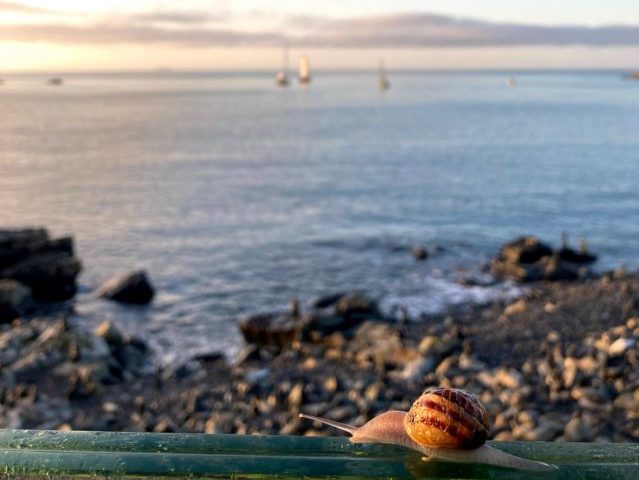
In her final post as Slipway editor, Ruth Moore reflects through a set of ‘postcards’ from her journey towards becoming a doctor of stories.
So, here I am. At the end. As Slipway writers before me can attest, it is a strange and unsettling thing to reach the far shore of a PhD. When I attended my Doctoral College induction back in September 2022, I soaked up every reference to my forthcoming research ‘journey’. As I stood on the slipway back into academia after many years in employment, ‘journey’ offered momentum; a reassuring promise of narrative arc. A journey always starts somewhere. It unfolds. It ends.
Or does it?
My experience (and that, I suspect, of countless other postgraduate researchers) is that my PhD has been the opportunity of a lifetime. Brilliant, refining, endlessly challenging. But there was no solid narrative arc. No clear path across the waters. In fact, I am astonished that any of us reach the far shore. Methodologies shift. New currents of research possibility urge us off course. Results surprise. Wider life insists. The viva comes and goes.
A journey, yes. But the route is blurred, unfinished.
To help myself acclimatise to life back on land, I have written a set of postcards, one for each year of my PhD. I offer them here to encourage anyone embarking behind me, and to hearten myself for what lies ahead. My three years of editing Slipway have taught me that the swapping and sharing of research stories is a vital part of helping each other stay afloat. Long may it continue.
Streatham campus, September 2022
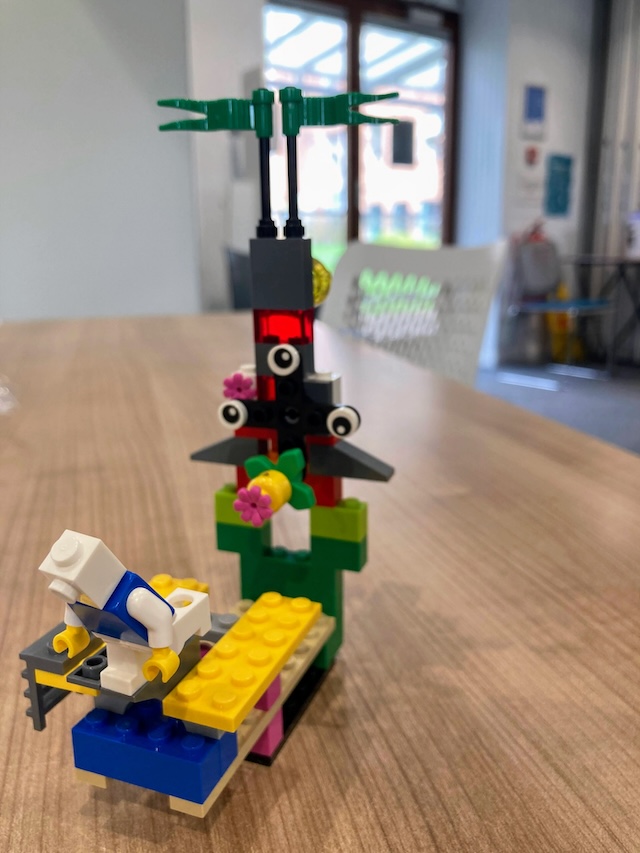
Exeter is seriously into LEGO® Serious Play®. I am sitting at a desk in the Queen’s building, listening to a group of freshly minted PhD students talk about their research. Bricks lie scattered in front of us, an offering to help us express our research projects. I am fascinated and terrified in equal measure. I can venture words about my intended project, sure, but they are clumsy. I don’t know if they come anywhere close to describing the journey ahead. Bricks? Really? I pick them up, start to play, enjoying the sensory connection with my caring responsibilities at home where dusty Lego builds adorn every available surface. Somehow this object emerges. A landmark? A precipice? A diver looking tentatively over the edge? Somehow, I have begun.
Greenwich, September 2023
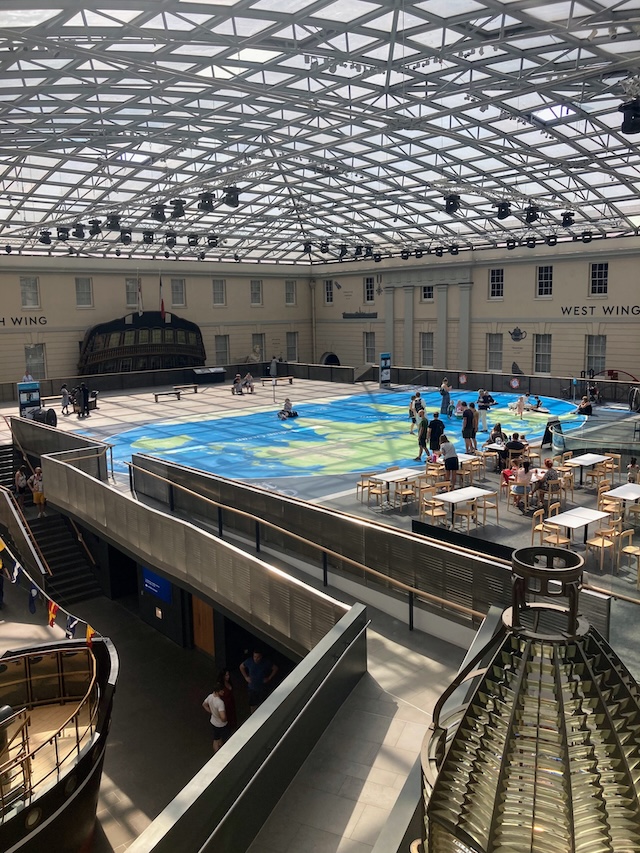
To London, to the National Maritime Museum for a conference about Shakespeare and the Sea. As soon as I walk in, I am captivated by the space. The novel I have been drafting for the past year rapidly rewrites itself into this cavernous, troubling setting. The sea has been seeping into my project for months. Now something about the sensory experience of being in this museum unleashes me. My notes from the conference sessions teem with shoals of new ideas. It is an exhilarating day. It is my first experience of learning to tack into the research wind.
Greenwich again, July 2024
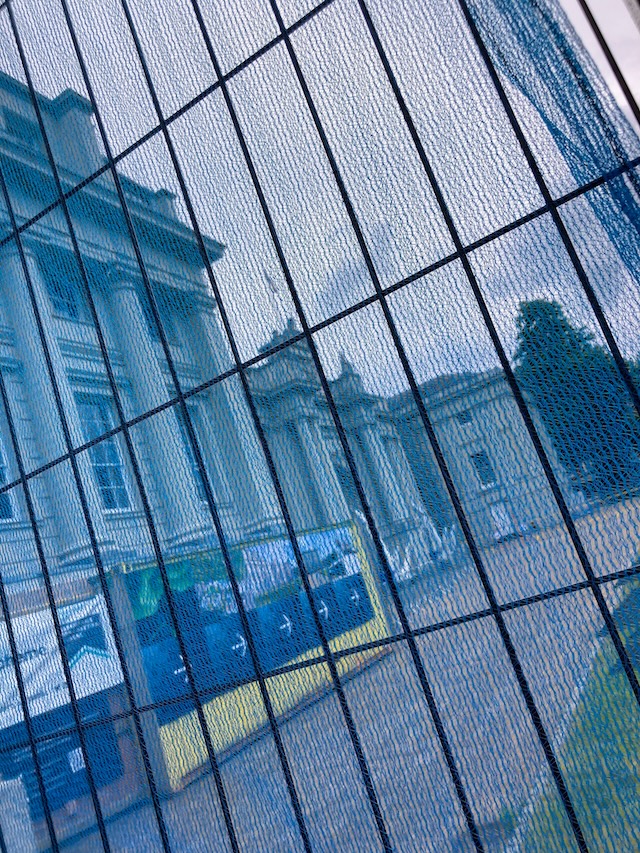
Hoarding has gone up around the museum. I’m back on site to glean more stories from the exhibits and to spend time on the Great Map which sprawls beneath the museum’s canopy. But the roof is leaking; the roof demands repair. The Map will be closed off for months. I knew this before I came, but I travelled anyway, prepared to work mouse-like around the edges. It feels apt that I am physically barred from entering the heart of the space at the same time that my novel has become becalmed. The research keeps deepening, the critical commentary is emerging, but something is missing. A shiver of wondering: will I find the shape of all this in time?
Cornwall, September 2025
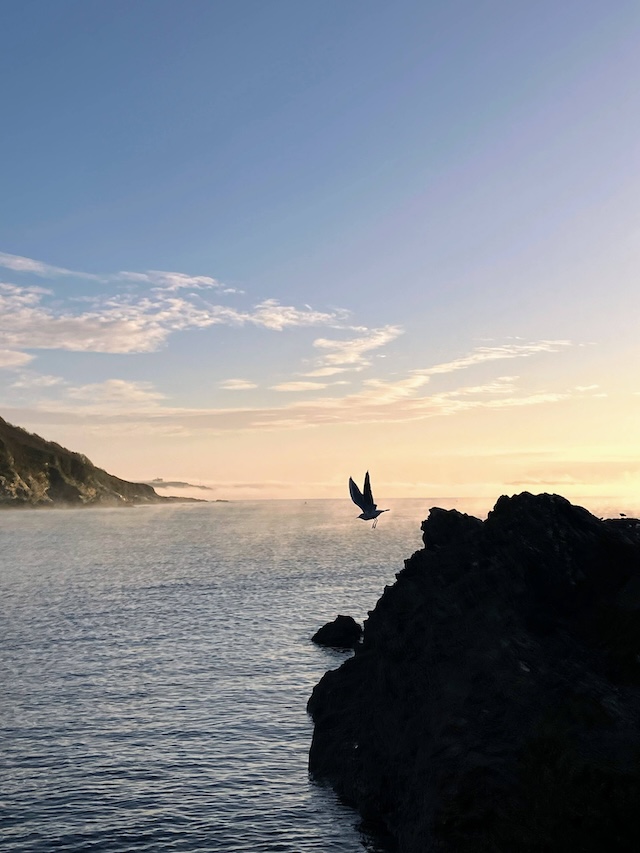
Maenporth. A gull takes flight from the rocks which now form part of the opening scene of the novel. Sometime this spring, the project tore itself away from London and sped southwest to this pre-dawn beach just along the coast from Falmouth. All those months of writing into an architectural space are breaking apart and reforming in this very different landscape. Thankfully, I know this ebb and flow by now. Practice-by-research, research-by-practice. The wind is back, the sail is full, the story is coming. More than any writing project before, I know all those words which went before are far from wasted. They brought me here. I am giddy as I watch the sunrise come.
Exeter St Davids, May 2026
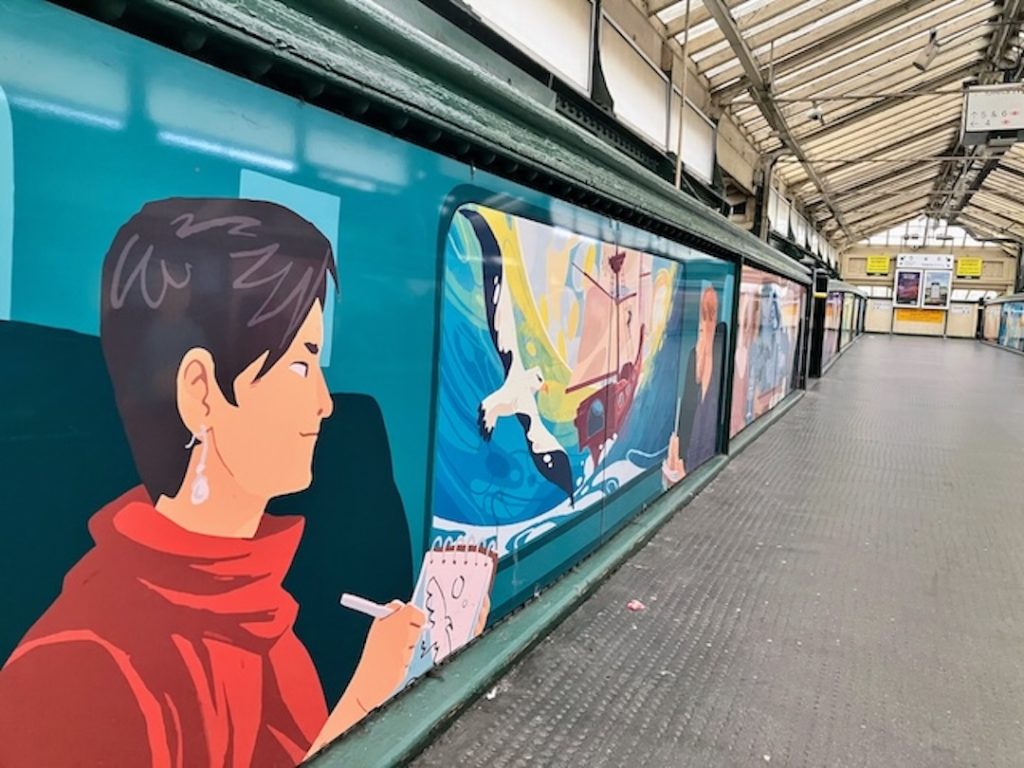
I have hurried along this footbridge many times over the past three years, crossing and re-crossing the divide between my home life in Oxford and my glad spell here in the Southwest. It is only today, as I leave for the last time, that I am stopped in my tracks this particular panel of the artwork by Billy Ruffian and Jack Ratcliff. The PhD journey may be over, but my pen and my notebook are still in my hands. The sea beckons. Onwards.
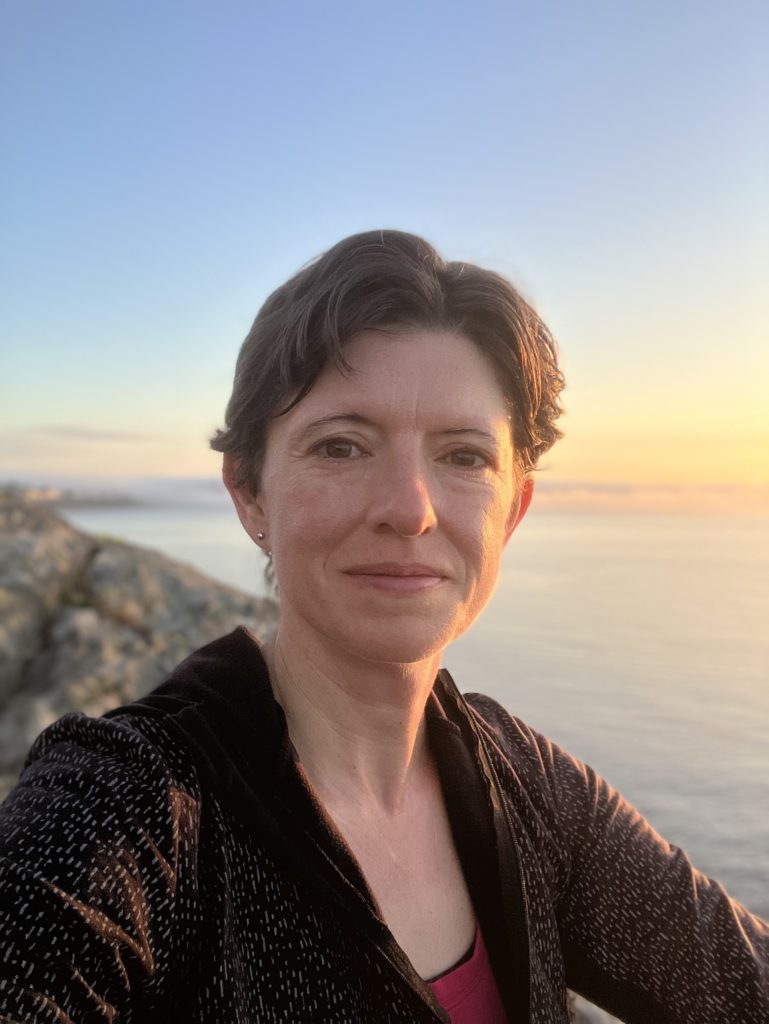
Ruth is a final year PhD Creative Writing student from Oxford. Her research examines the ways in which contemporary children’s authors are using time-playful fiction, particularly in relation to telling stories out of archival silence. The creative element of her PhD project is ‘The Island of Last Hope’ a middle grade children’s novel which takes place in Falmouth in the present day and 1944. Her MA in Creative Writing was at Oxford Brookes University; she also holds an MA in Applied Theatre from the Royal Central School of Speech and Drama and has worked in theatre and in project management in higher education and the voluntary sector.