
What do we mean by Patient and Public Involvement and Engagement (PPIE), and how can researchers and members of the public participate? Find out more about the opportunities for PPIE at the University, and how our researchers are collaborating with patients and the public.
Within health and social care research, PPIE is a standard part of researchers’ practice to ensure their work responds to the needs of those who are directly affected by it. This blog provides a brief overview of what PPIE is, and shares a resource detailing the ways to get involved with PPIE groups at the University of Exeter.
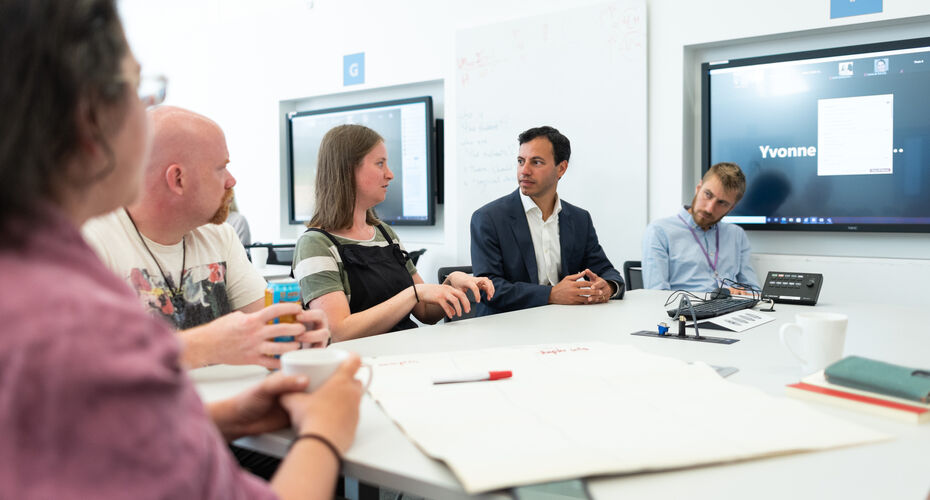
PPIE is about researchers working in partnership with patients and the public to shape research. In universities, this means involving people in decisions about research from the start, valuing different forms of knowledge, and creating open conversations that make research more ethical and relevant to the communities it serves. Activities involving these patient and public perspectives can take many forms, whether these are workshops, one-to-one conversations, surveys, or advisory group meetings. These may happen at different stages of a project, from early idea-building through to reviewing findings and thinking about how results are shared beyond the university.
The University of Exeter hosts a range of PPIE groups, inviting public contributors to share their views, questions, and experiences with researchers. This is an invaluable way to help ensure that research is grounded in real-world needs and concerns, not just academic priorities. Creating open, respectful ways of working helps universities value a range of expertise, strengthening research and its impact beyond the campus.
Recently, we created an interactive tool for University of Exeter staff that helps map out existing groups and networks across both our Devon and Cornwall campuses. For a public audience, this information has been summarised into a PDF, available on our website, along with a series of case studies, and stories from PPIE participants.
If you would like to see how PPIE groups can make a difference – both in the context of a project, and moving forward to put that research into practice, take a look on our blogs page.