
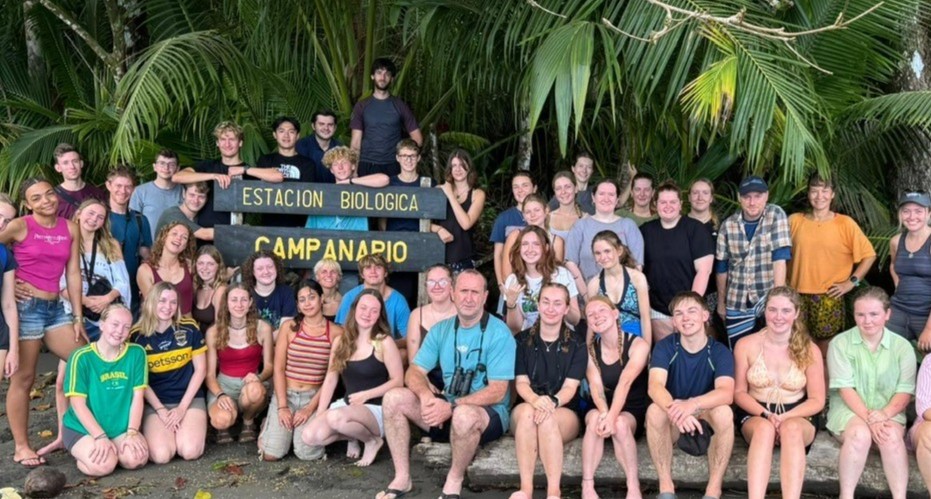
Hola! My name is Prisha and I want to reminisce last September when I travelled to the most magical country as part of my third year BSc Zoology field course.
I think some university experiences stay with you long after the assignments are submitted and the lecture notes are forgotten. For me, my field course to Costa Rica was that kind of experience. It was muddy walking boots, late-night walks through the jungle, and the occasional moment where everyone froze because someone had spotted something incredible in the trees.
As a Zoology student at the University of Exeter, the trip was part of a module focused on tropical biodiversity and conservation. On paper, it involved fieldwork, research, group presentations, and assessments. In reality, it was also an unforgettable adventure shared with course mates, where we could put our theory into practice. Plus, having all the food and accommodation sorted for 2 weeks by the uni just made it even better!
Over the course of the trip, we travelled through several very different regions of Costa Rica: starting in San Jose, going to Monteverde, La Selva Biological Station, Osa Peninsula and Las Vueltas. Each place offered a completely different landscape, wildlife experience, and perspective on conservation. Looking back, it has been one of the most memorable parts of my degree , and travel experiences.
Learning outside the lecture theatre
Costa Rica is one of the most biodiverse countries in the world. Instead of just reading about these ecosystems in research papers, we were able to experience them firsthand.
The field course also included formative tasks. In small research groups, we had to choose a research topic related to tropical biodiversity and conservation – my group chose to think about how we could track Margays through biological corridors (paths that allows animals to travel between habitats).
During the trip we worked on gathering information, planning methods, and ideas that would later feed into a factsheet, a presentation, and eventually an essay assessment. A big part of the fieldtrip experience was the role of the academics who led the trip. They constantly encouraged us to think deeper by asking challenging questions during hikes, pushing us to justify our ideas during group discussions, or by sharing their own experiences in the field. They made the learning feel interactive and it never felt like we were just being told information. Spending so much time together in the field made them feel far more approachable and so much easier to ask for advice and seek support back on campus.
Presenting the research proposal to other groups working on other topics, while actually standing in tropical ecosystems made the discussions feel much more engaging.
A well as this, every evening we would either have short lectures or group discussion which we led to each other in small groups, on topics that we had researched before the fieldtrip. This pushed us to properly understand the subject area we had to talk about and communicate ideas clearly. Plus, academic talks from professionals about their work in the field. One that stood out to me was a speaker talking about the Bellbird biological corridors, I learnt that the National programme of biological corridors started in 2006 for the promotion of conservation and sustainable use of biodiversity in Costa Rica.
The best part of learning outdoors was the fieldwork we undertook in the forests at La Selva Biological Station. We conducted a census of species to estimate the population size between two forests. Doing this in groups and using data collection and observation skills was so much fun, even though it was sweltering one moment and pouring it down the next, it was a great experience I wouldn’t have got anywhere else. Though sometimes Cornwall likes to chuck it down with rain the same way…
Moments between learning
Of course, not every moment of the trip was structured learning.
There were also plenty of moments where we simply enjoyed exploring new places together. Whether it was playing cards after a long hike, chatting over dinner, or sharing stories about the wildlife we’d seen that day, those moments helped create a strong sense of friendship within the group.
Spending so much time together inevitably strengthened friendships. Long journeys on the coaches, shared experiences, and the occasional muddy mishap tend to bring people closer together and is something I will remember most about the trip, that it wasn’t just the place we went that made it special, it was the company I had too.
Night Walks and Wildlife Hikes
The structure of each day revolved around exploring the surrounding environments and searching for wildlife.
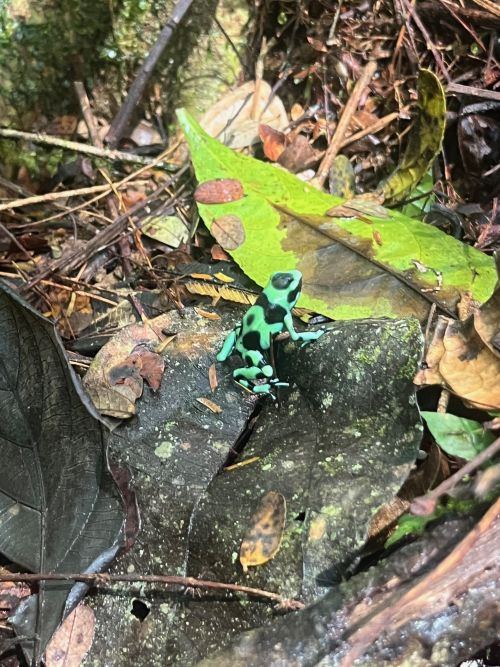
There were plenty of hikes through forests and along trails, sometimes with expert guides who could spot animals that most of us would have completely missed. It quickly became clear how well-adapted many rainforest animals are at blending into their surroundings. A guide would casually point out a frog or insect that had been sitting right in front of us the entire time. For example the Green-black poison dart frog which as you may have guessed by the name, is coloured green and black, doing very well to camouflage to the foliage.
One of the most exciting parts of the fieldwork was the night walks.
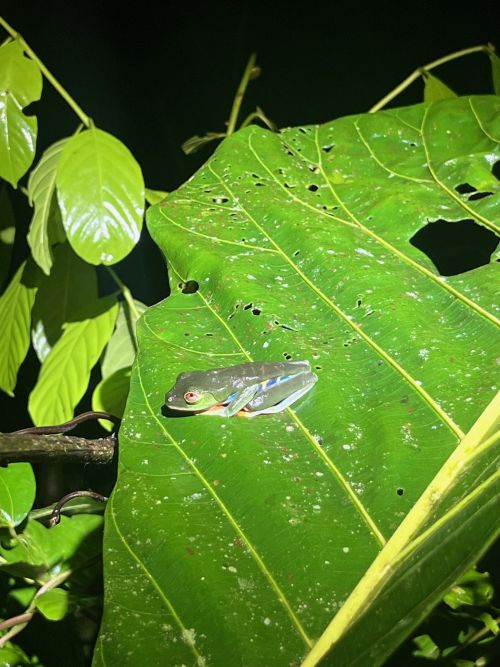
Armed with head torches, we would head out into the forest after dark, which completely transformed the environment. The sounds became louder, the air felt heavier, and the forest seemed full of movement. Night walks are when many tropical species are most active, so it was the best time to spot frogs, insects, reptiles, and other nocturnal animals.
There’s something both thrilling and slightly surreal about walking through a rainforest at night, scanning the leaves with a torch, looking for any eyeshine and never quite knowing what you might find.
Monteverde: the cloud forest
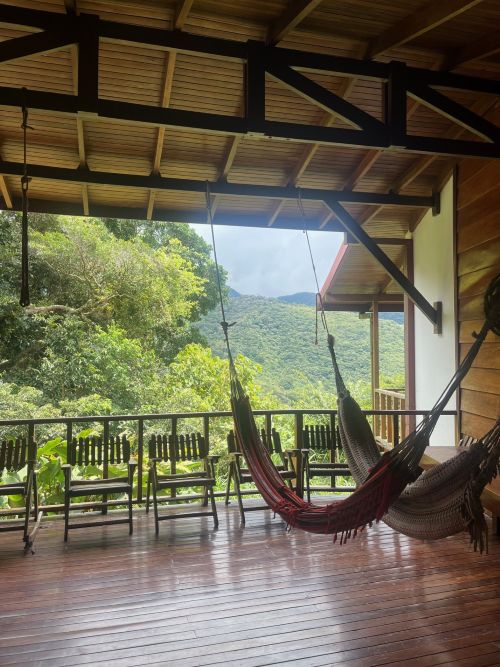
Our first stop of the trip was Monteverde, famous for its cloud forest ecosystem.
The atmosphere there felt almost magical. Mist drifted through the trees, moss covered the branches, and the entire forest felt lush and alive. It was incredibly humid, creating perfect conditions for a huge range of plant and animal species to thrive.
We spent our time hiking through the forest, spotting wildlife, and learning about how these ecosystems function. Suspension bridges allowed us to walk high above the forest floor, giving us a completely different perspective on the canopy.
Monteverde was the perfect introduction to Costa Rica’s biodiversity. Every trail seemed to reveal something new, and it was so fun to talk with peers about what species they had seen on other paths.
Some notable species we found in Monteverde were Howler monkeys, Montezuma oropendola, Capuchins fighting a Kinkajou in the canopy, a Tiger rat snake and several hummingbirds.
La Selva: staying at a biological station
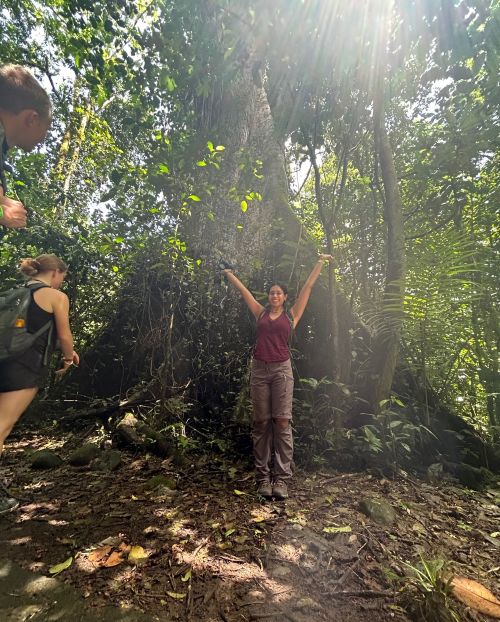
From the cloud forest we travelled to La Selva Biological Station, a world-renowned research site in the lowland rainforest.
Here the heat and humidity were also intense, but so was the biodiversity. La Selva is used by scientists from around the world to study tropical ecosystems, so it was fascinating to see real research happening in the same place we were learning.
We set out early most mornings and late most nights too, to maximise our chances of spotting wildlife. Here we encountered several magnificent species, including Spider monkeys, Strawberry poison dart frogs, 2-toed and 3-toed sloths, Yellow throated and Keel billed toucans; as well as Fer-de-lance snake. This snake is extremely venomous in Central America, spreading toxins though the blood if bitten. Luckily, with our expert guides who knew the forests in and out, they were identified quickly and we were told to move aside.
But, even watching tiny Leafcutter ants carrying pieces of leaves along perfectly organised trails was surprisingly mesmerising. It was a small moment, but it highlighted how complex even the tiniest ecosystems can be.
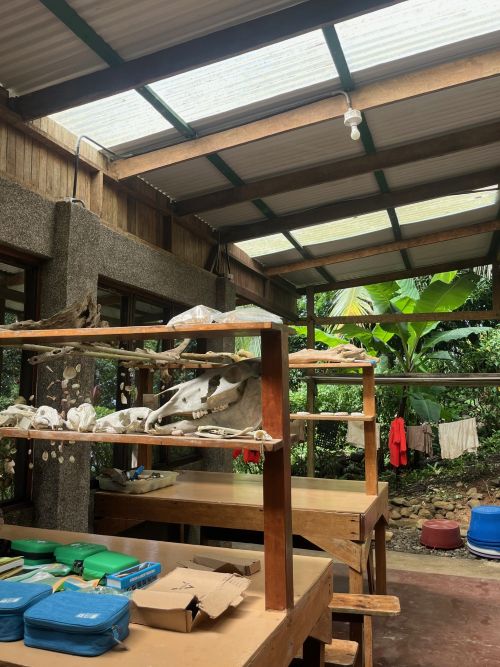
Being in a working research station also gave us insight into the practical side of scientific research, this is where we got to put out data collection skills to the test.
The Osa peninsula: wild and remote
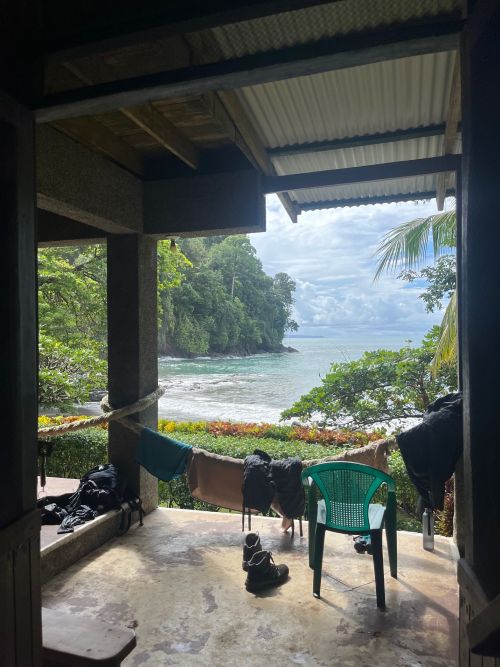
If any location truly felt like an adventure, it was the Osa Peninsula, definitely one of my favourite locations I visited in Costa Rica.
Getting there involved a long journey, including a boat ride through the mangroves along the coast. And that journey turned into one of the most memorable moments of the entire trip.
As we travelled by boat, we suddenly spotted Humpback whales surfacing in the water nearby. Watching them rise and disappear again against the backdrop of the Pacific Ocean was completely unexpected and absolutely incredible. Everyone screamed in excitement, for some of us, this was our first ever encounter with a Humpback. I guess you could count the Humpback whale that visited Falmouth during my first year, that was pretty epic too!
Here, there was no place to land the boats, so everyone jumped into the warm sea and swam to the shore, I guess you could say it felt a bit like a movie. We then had to make a human chain to pass all our luggage off the boats and onto the beach, such a fun highlight.
One of the activities that were planned for us was snorkelling. It was a fantastic morning for it, and even though the water was slightly unclear, we were still able to spot a Hawksbill turtle and some Dorado fish. I imagine the marine biology students were loving it, as did I as someone who hadn’t really done proper snorkelling before.
The Osa Peninsula itself felt incredibly wild. We didn’t have any signal here and were off the grid.
Wildlife encounters here felt particularly special because of how untouched the environment seemed. Osa was where I possibly had my favourite animal encounter. Story time: I was just showering in the outdoor bathroom area of our cabin when all of a sudden, my friend shouted from outside, “you’ve got to come outside, now!”. I hurried out, wrapping myself in just a towel and guess what I saw just behind our cabin? A Puma. One of my course mates had spotted it and gathered everyone so we could all see it, an animal all of us were longing to see on this trip. It was one of those moments where the entire group went quiet, trying to process what we were seeing, so close to us too.
Experiences like that are impossible to recreate anywhere else.
Las Vueltas: beautiful mountains
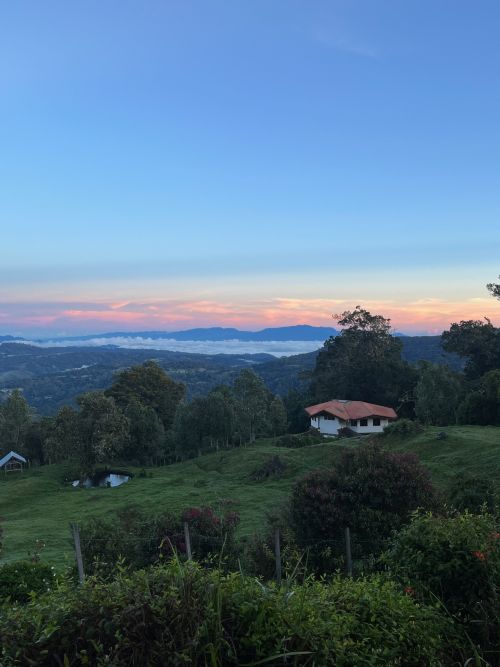
Our final stop was Las Vueltas in the Talamanca’s; a smaller, mountainous and rural area that gave us a different perspective on conservation. Here the temperature was so much colder, we actually had to wear jumpers and had a wood-burning fire iIn the middle of the cabin we were staying in.
Instead of dense rainforest, this region was characterised by rolling hills and agricultural landscapes. Here we learned about sustainable farming practices and how local communities manage land while protecting biodiversity. Sadly, as I had a splinter in my foot and couldn’t walk properly, I didn’t join in with the hike, but I did get to hear all the stories afterwards.
In the meantime, I had a chance to call my parents to show them the picturesque view; talk with the owners of the cabin and how they made their own butter and cheese and play some rounds of cards with a few others who also stayed behind. I’d say that sounds like a perfectly fine day to spend my last day in Costa Rica.
Learning lots of skills!
From teamwork and data collection in the field, to leading group discussions and presenting ideas, the Costa Rica fieldtrip really built my confidence and ability to think critically in environments where things might not always go to plan. And being surrounded with so many of your peers for two weeks straight was the perfect way to learn things from each other, I was amazed with how many of my coursemates knew specific names of species just with one look and no help from a field guide! As well as this, being immersed in such a new setting, and seeing how complex ideas were conveyed in simpler and interesting ways showed me how science communication is so important if we want everyone else (not just zoologists) to care about wildlife too. So, I will definitely be taking my presenting and communication skills with me far beyond just my degree.
Finally…
Looking back, this field trip reminded me exactly why I chose to study Zoology in the first place. It wasn’t just about seeing incredible wildlife, it was about travelling somewhere new and experiencing ecosystems we had studied for years, while building friendships and skills that will stay with me far beyond university.
Fieldtrips like this are what make studying at the University of Exeter feel so special, and Costa Rica will always be a place I associate with adventure, learning, and memories that I’ll be talking about for years to come.