

Hello! My name is Eunjeong Cho, though you can also call me Luna. I’m from the Republic of Korea and currently studying for a Master of Science in Environment and Human Health at the University of Exeter’s Penryn Campus in Cornwall.
Choosing where to study abroad can feel overwhelming. When I was researching universities, I considered many factors: course content, research quality, campus atmosphere, location, career opportunities, and, of course, how I would feel living there. For many international students, the decision also involves thinking about cultural differences, the learning environment, and whether the university will truly support you during your time there.

Looking back now, I realise that some of the reasons I chose Exeter were clear from the beginning, while others only became obvious after I arrived. Before coming to the UK, I spent months researching universities, reading course descriptions, comparing modules, and talking to people who had studied abroad. At the time, I thought I was simply choosing a degree programme. But I was choosing the environment where I would spend an important chapter of my life.
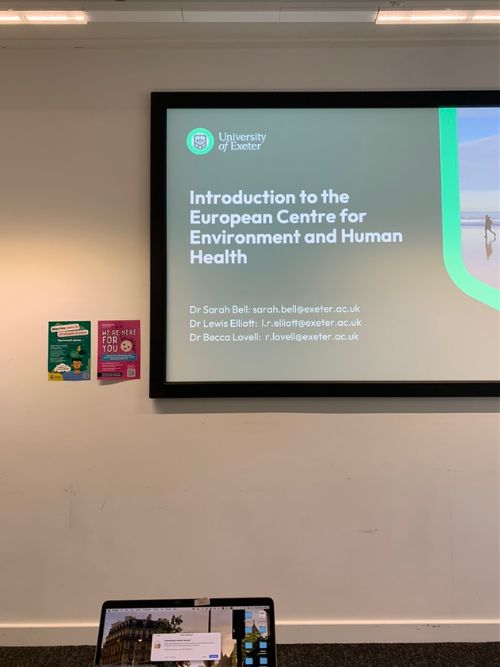
In this blog, I’d love to share both the reasons that led me to choose the University of Exeter and the experiences that confirmed that I made the right decision after arriving here.
Finding the right academic fit
Before coming to the UK, my biggest priority was finding a course that aligned closely with my academic interests and long-term career goals.
My academic and professional background focuses on environmental health policy. During my undergraduate studies in Korea, I became increasingly interested in the connections between environmental systems and human wellbeing. Later, I had the opportunity to work on biodiversity and ecosystem projects in Thailand. These experiences opened my eyes to how environmental changes directly affect public health, communities, and global sustainability. However, they also made me realise that there were gaps in my knowledge that I wanted to explore further through postgraduate study.

The field of environment and human health is quite specialised and interdisciplinary. When I began searching for master’s programmes, I found that many universities offered courses related to climate change, environmental science, or occupational health. While these programmes were interesting, they often focused on only one aspect of the broader relationship between environment and health.
What I was looking for was something more integrated – a programme that combined environmental science, epidemiology, public health, and policy.
When I discovered the MSc Environment and Human Health at Exeter, it immediately stood out. The programme offered exactly the interdisciplinary perspective I had been searching for. It also emphasised evidence-based research and policy relevance, which are both crucial for addressing real-world environmental health challenges.
Having spent months comparing modules and research centres, I felt confident that I had found the right match. Starting the course only confirmed this; the interdisciplinary approach was exactly what I had prepared for, reassuring me that my thorough research had led me to the perfect academic fit.
For me, choosing Exeter wasn’t just about studying abroad – it was about studying the right subject in the right environment.
What the course is really like
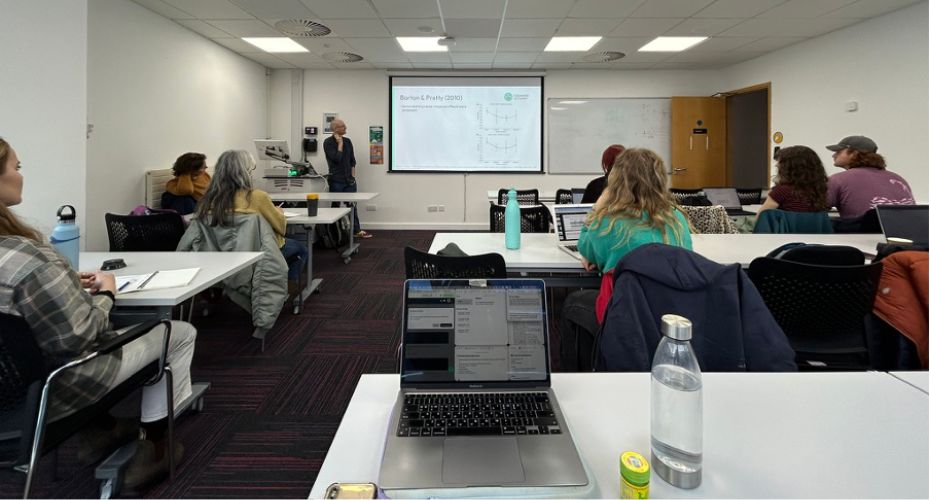
After arriving at Exeter and beginning my studies, experiencing the high quality of these modules firsthand made me feel certain that I had made the right choice for my degree.
The programme is organised across three terms. The first two terms focus on taught modules, while the final term is dedicated to writing a dissertation.
Because environment and human health is an interdisciplinary field, the course draws knowledge from many areas including environmental science, epidemiology, policy analysis, and global health.
Lectures are delivered by academics from the European Centre for Environment and Human Health (ECEHH), as well as guest speakers who are experts in their fields. Hearing directly from researchers and practitioners working on real-world environmental health issues has been particularly inspiring.

One module that had a significant impact on me was Designing Impactful Research. Before starting my master’s programme, I often felt anxious about academic writing and research design. This module helped me understand different research methods and how they are used in environmental health studies. It also guided students step-by-step through the process of developing a research proposal. Thanks to this experience, I now feel much more confident about working on my dissertation.
Another aspect I really enjoy about the programme is the interactive style of learning. Instead of only traditional lectures, many sessions involve discussions, presentations, or seminars with guest speakers.
These formats encourage students to share perspectives and ask questions, which often leads to deeper and more interesting conversations.
For me personally, these interactions have also helped me gain confidence in presenting ideas and communicating in my second language.
Sustainability in action
Another factor that strongly influenced my decision was Exeter’s commitment to sustainability.

Many universities highlight sustainability in their marketing materials, but what impressed me about Exeter was how visible and practical it is across the campus environment.
The Penryn Campus, where I study, is shared by the University of Exeter and Falmouth University. It is surrounded by greenery and close to the beautiful Cornish coastline. Walking through campus, you can see biodiversity information boards, protected habitats, and green spaces designed to support local wildlife.
Sustainability initiatives are also embedded into everyday campus life. Recycling facilities are clearly organised, sustainability projects are regularly promoted to students, and there are student groups dedicated to environmental action.
These may seem like small details, but together they create a culture where sustainability is not just discussed in lectures – it is practised daily.
As someone who hopes to contribute to environmental and health policy in the future, studying in a place that genuinely practises the values it promotes was incredibly meaningful to me. It reassured me that I would be learning in an environment that takes environmental responsibility seriously.
A community that makes you feel at home
Moving from large cities to a smaller town in Cornwall was a big change for me.
At first, I wasn’t sure what to expect. I had lived in busy urban environments for most of my life, so the idea of studying in a quieter coastal region felt unfamiliar.
However, one of the most meaningful discoveries I made after arriving was Exeter’s vibrant and welcoming student community.
Throughout the year, there are many student-led events and activities that help students connect with each other. Welcome Week was particularly memorable because it provided opportunities to meet people from different countries and academic backgrounds.
There are also many regular events organised by student groups and societies, such as craft days, karaoke nights, collective meetings, and the well-known “Free Soup Fridays.”
Beyond campus, Cornwall offers unique experiences that are closely connected to nature. Students often organise activities like beach barbecues, yoga sessions by the sea, coastal walks, and boat trips.


These moments have helped me realise that the richness of university life doesn’t depend on the size of the city – it depends on the people you share the experience with. The vibrant community I found here is something I couldn’t have fully pictured before arriving. Looking back, this sense of belonging is a major reason I feel so confident in my decision to join Exeter; it’s the people and the connections that truly make this university the right fit for me.
Student wellbeing support
Studying abroad can be exciting and rewarding, but it can also come with emotional challenges.
To be honest, I didn’t love the UK from the very beginning. Last winter was particularly difficult for me. Cornwall’s winters can be long, dark, and rainy. As someone who grew up in a different climate, I found it challenging to adapt. I often felt unmotivated and low in energy, and my mood began to affect my daily routine. At the time, I didn’t fully realise that I was struggling with my mental wellbeing.
Fortunately, I discovered the University’s student Wellbeing Services, which became an important turning point for me.

Through several support sessions, I had the opportunity to talk openly about my feelings and challenges. The staff were incredibly kind and patient, listening carefully and offering practical advice that I could start applying immediately. They also followed up regularly to check my progress and shared useful resources to help me manage stress and maintain healthier habits.
Having someone who listens without judgement can make an enormous difference – especially when you are living far away from home. This experience reminded me that universities are not only places for academic learning, but also communities that care about students’ wellbeing.
Additional support for international students
Another aspect I really appreciate about Exeter is the additional support available for international students.

The Career Zone, for example, offers personalised guidance on CV writing, LinkedIn profiles, and job applications in the UK. Before applying for opportunities, I booked appointments with advisors who reviewed my CV and suggested improvements. Their feedback helped me understand how professional applications work in the UK context.
I also attended several English language workshops organised by the University. These sessions covered topics such as academic writing, social communication, grammar usage, and professional communication.
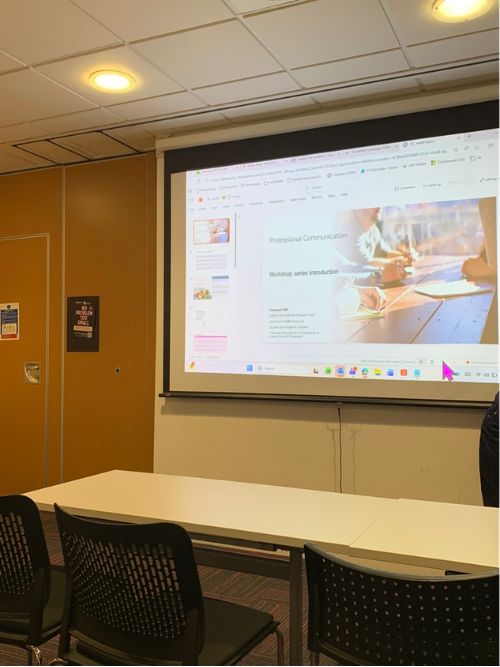
At first, I was quite worried about my English skills, especially when it came to presentations and academic writing. However, these workshops provided a supportive environment where international students could practise and improve their language skills without feeling pressured.
The extensive support for international students, from the Career Zone to language workshops, has been instrumental in my growth. These resources have turned my initial anxieties into confidence, serving as a constant reminder that Exeter was the best place for me to thrive globally.
Tips for choosing your university
If you are currently considering postgraduate study, here are a few tips that helped me during my own decision-making process.
First, think carefully about your goals.
Ask yourself what you want to gain from further study and how it connects to your long-term career.
Second, research courses thoroughly.
Look closely at the modules, lecturers, research centres, and opportunities offered by each programme. Even if courses have similar names, their focus and teaching approach can be very different.
Third, organise your information.
When comparing universities, creating a simple table can help you track important details such as course content, tuition fees, scholarship opportunities, and campus location.
Finally, consider connecting with alumni or current students through platforms such as LinkedIn or Exeter’s Ask A Student online chat. Talking to someone who has already studied the programme can provide valuable insights that you might not find on official websites.
Looking back
There were moments when I questioned my decision, as many international students do when adapting to a new environment. But now, looking back on my experience so far, I feel confident that I chose the right university.
The people at Exeter – students, professors, and staff – are what truly make the University special. Their openness, kindness, and enthusiasm create an environment where students can grow academically and personally.
If you’re curious about what everyday life here actually looks like, I’ve also written another blog about a typical day in my life in Cornwall. From morning walks across the Penryn Campus to studying, meeting friends, and enjoying the beautiful coastline, it gives a glimpse into what student life here is really like.

I’m excited to continue learning, meeting new people, and building meaningful experiences during my time at the University of Exeter.