Posted by Ted Feldpausch
15 May 2024Between 19 and 30 April 2024, the Amazon PyroCarbon Project team travelled to the Rio Branco region of Acre, Brazil, to revisit permanent forest plots established more than a decade ago by partner institutions. The aim was to collect soils from recently burned forests and install equipment to measure soil respiration, building a long-term picture of how fire alters carbon cycling in Amazonia.
The campaign brought together around ten researchers and students from four institutions: the University of Exeter (UK), the Federal University of Acre (UFAC), the University of São Paulo (CENA/USP), and the National Institute for Space Research (INPE, Brazil), alongside local guides with invaluable knowledge of the terrain.
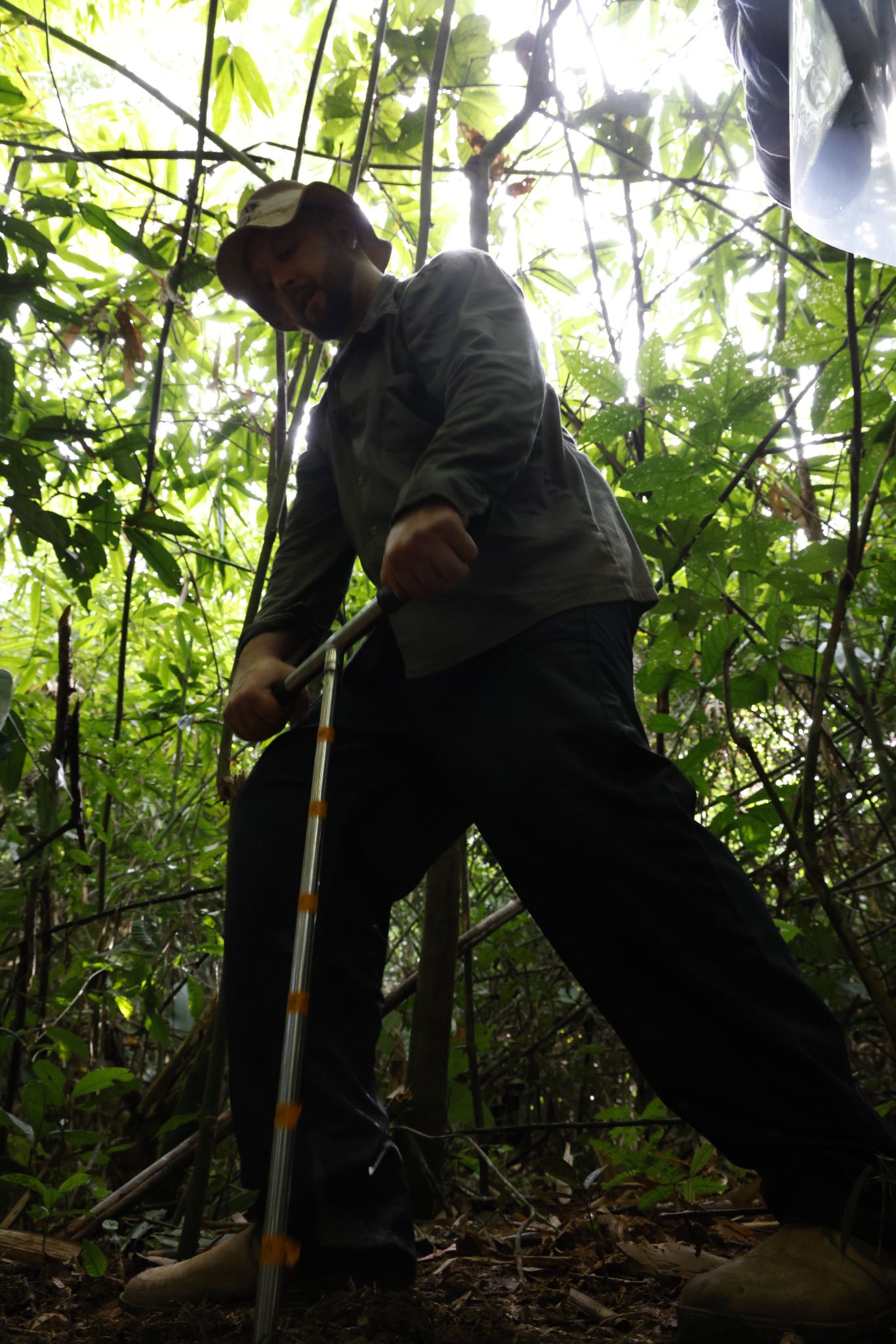
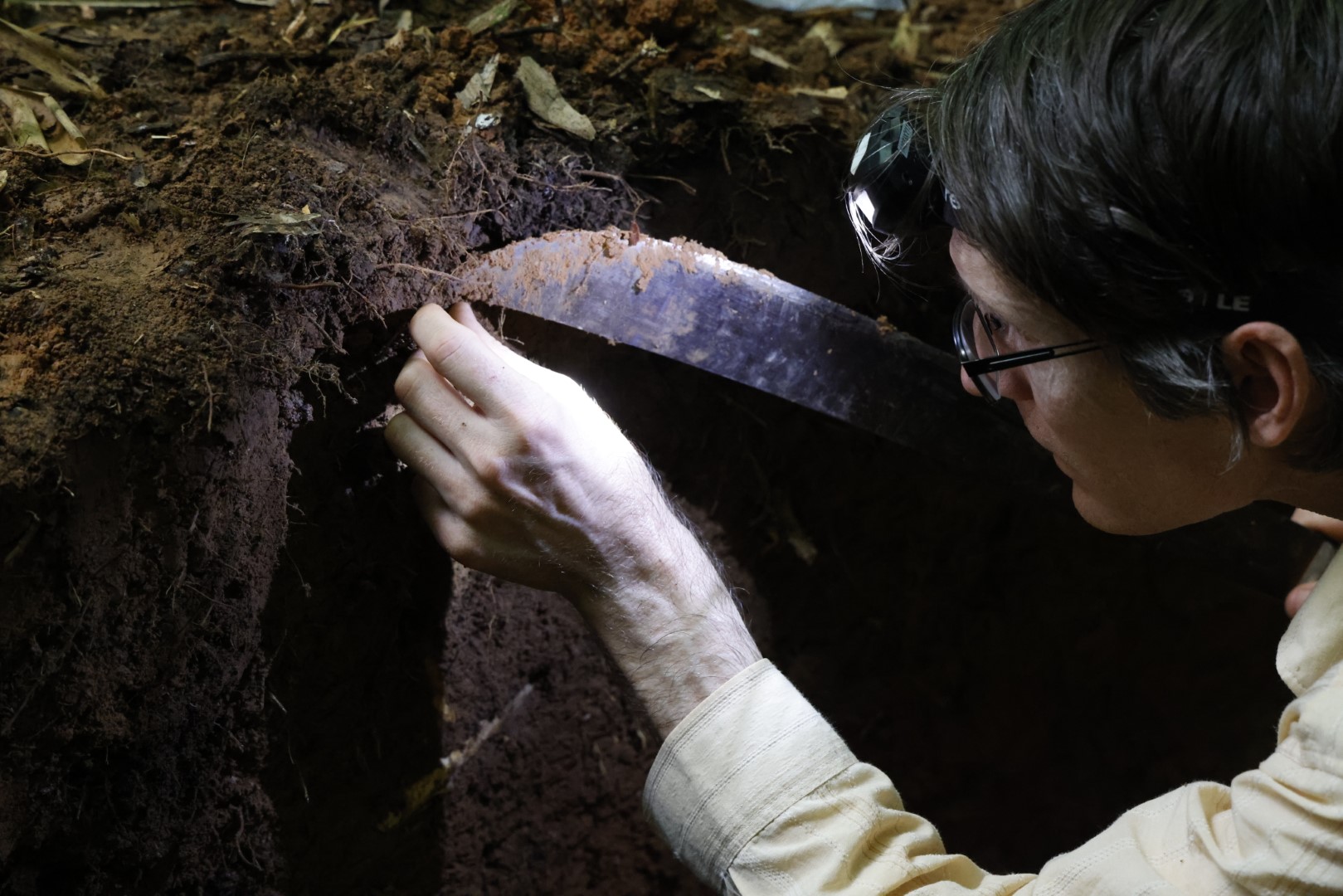
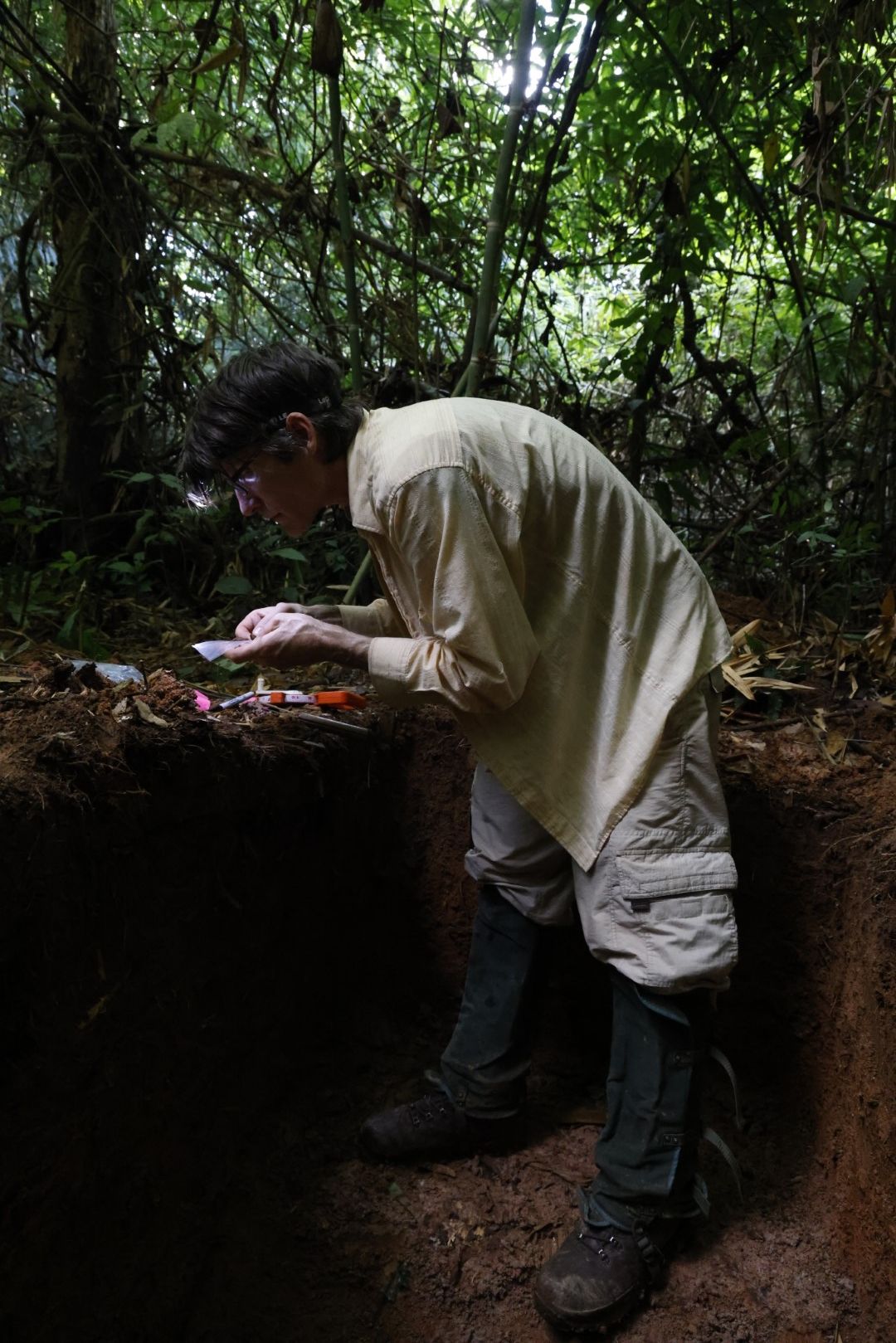
Soil samples were collected across nine forest plots with varying degrees of burning, three pastures, and two agroforestry systems: a range of land-use histories designed to capture the breadth of fire impacts on Amazonian soils. In addition to standard auger cores, the team excavated two trenches to one metre depth, carefully searching each layer for charcoal fragments. These samples are essential for dating ancient fire events in Amazonia: burn scars that can range from 500 to 10,000 years old.
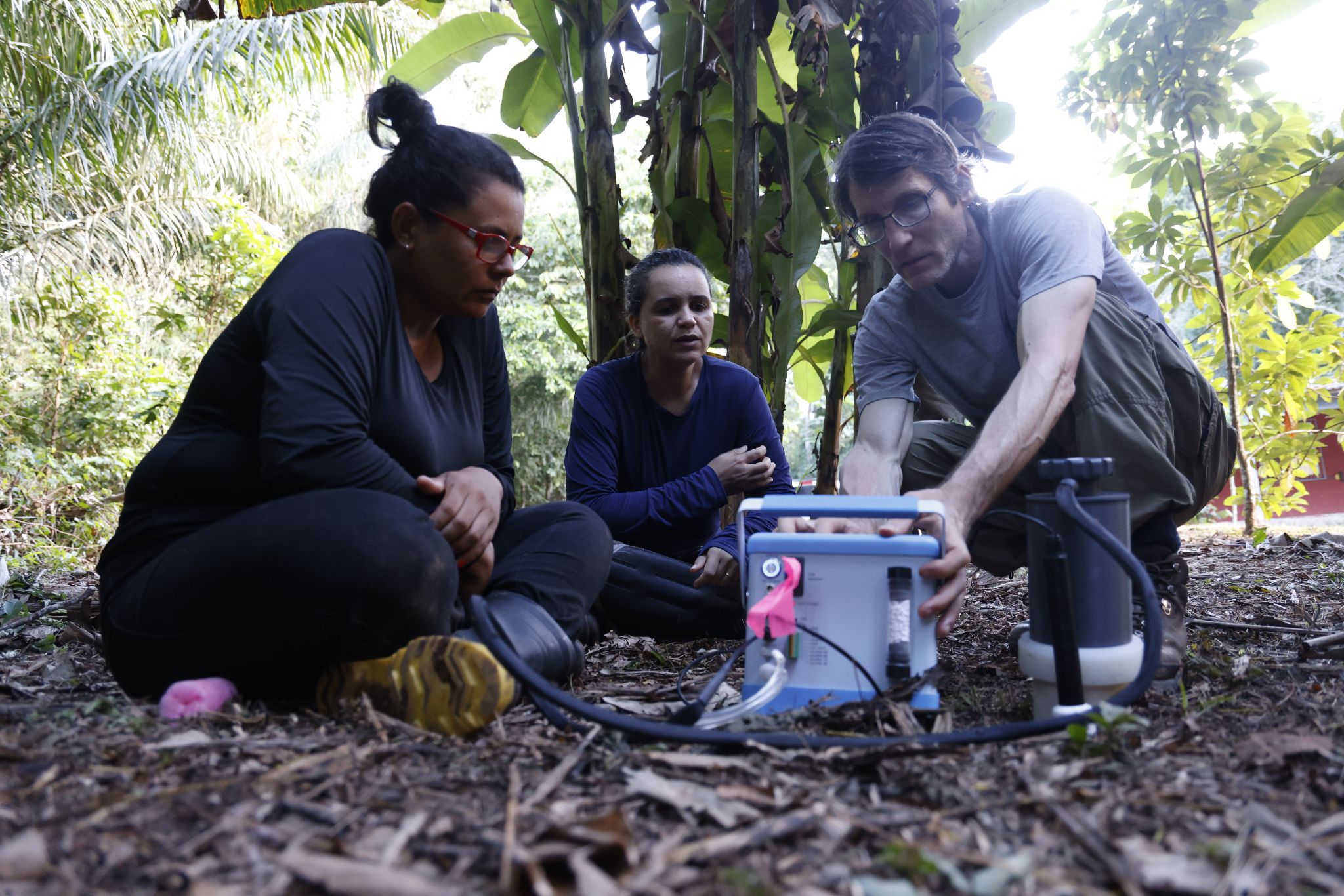
The campaign also supported a complementary soil respiration study led by PhD student Francisca Silvana Silva, enrolled in the Biodiversity and Biotechnology programme at UFAC. Eight permanent monitoring plots were established for monthly measurements of soil CO₂ flux using a portable EGM-5 analyser. The research is supervised by Prof. Dr. Marcos Silveira and Prof. Dr. Simone Reis (UFAC), with collaboration from Prof. Dr. Ted Feldpausch (University of Exeter) and Dr. Wanderlei Bieluczyk (CENA/USP). This dataset will link to ongoing soil respiration work at sites in Santarém (Pará), Confresa (Mato Grosso), and Querência (Mato Grosso).
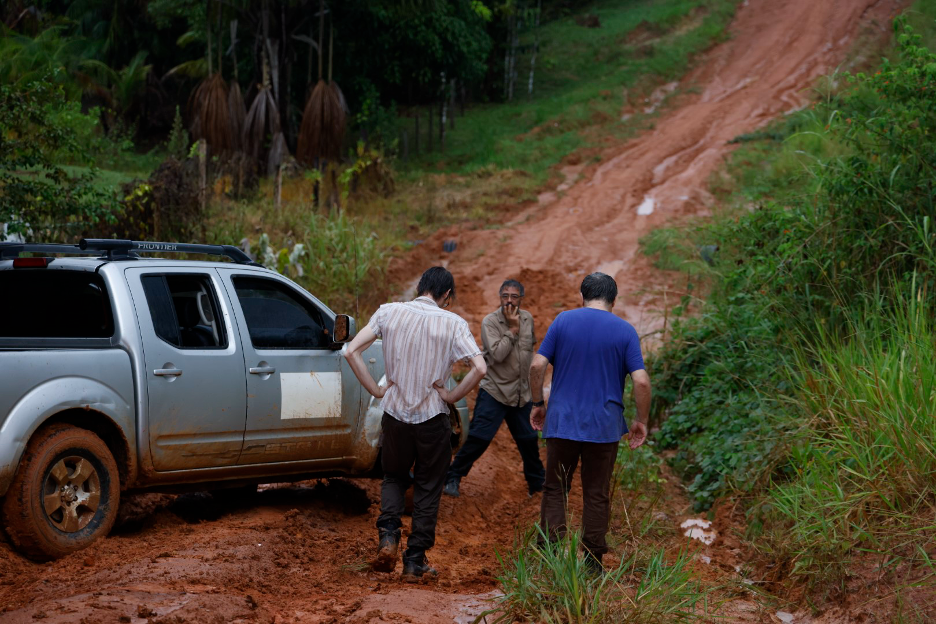
Fieldwork in Amazonia demands resilience. High temperatures and humidity make every day physically demanding, but the team faced a further test when an afternoon rainstorm transformed dirt roads into mud. After a long day, we still had to work to free two trucks that had become stuck in two separate locations.