
Posted by Ted Feldpausch
22 October 2025PhD student Gavyn Mewett has returned from a month of fieldwork in Ghana, where he surveyed lightning-struck trees across two of the country’s key forest reserves as part of his PhD research at the University of Exeter.
The Africa Lightning Project, led by Professor Tim Hill and co-Investigators Professor Ted Feldpausch at the University of Exeter and Dr Dan Mitchard at the University of Cardiff Lightning Laboratory, aims to quantify how lightning, an often-overlooked but potentially significant disturbance, affects tropical forest structure, carbon dynamics, and species composition. With lightning frequency projected to increase by around 7% per degree of global warming, understanding this process is increasingly urgent.
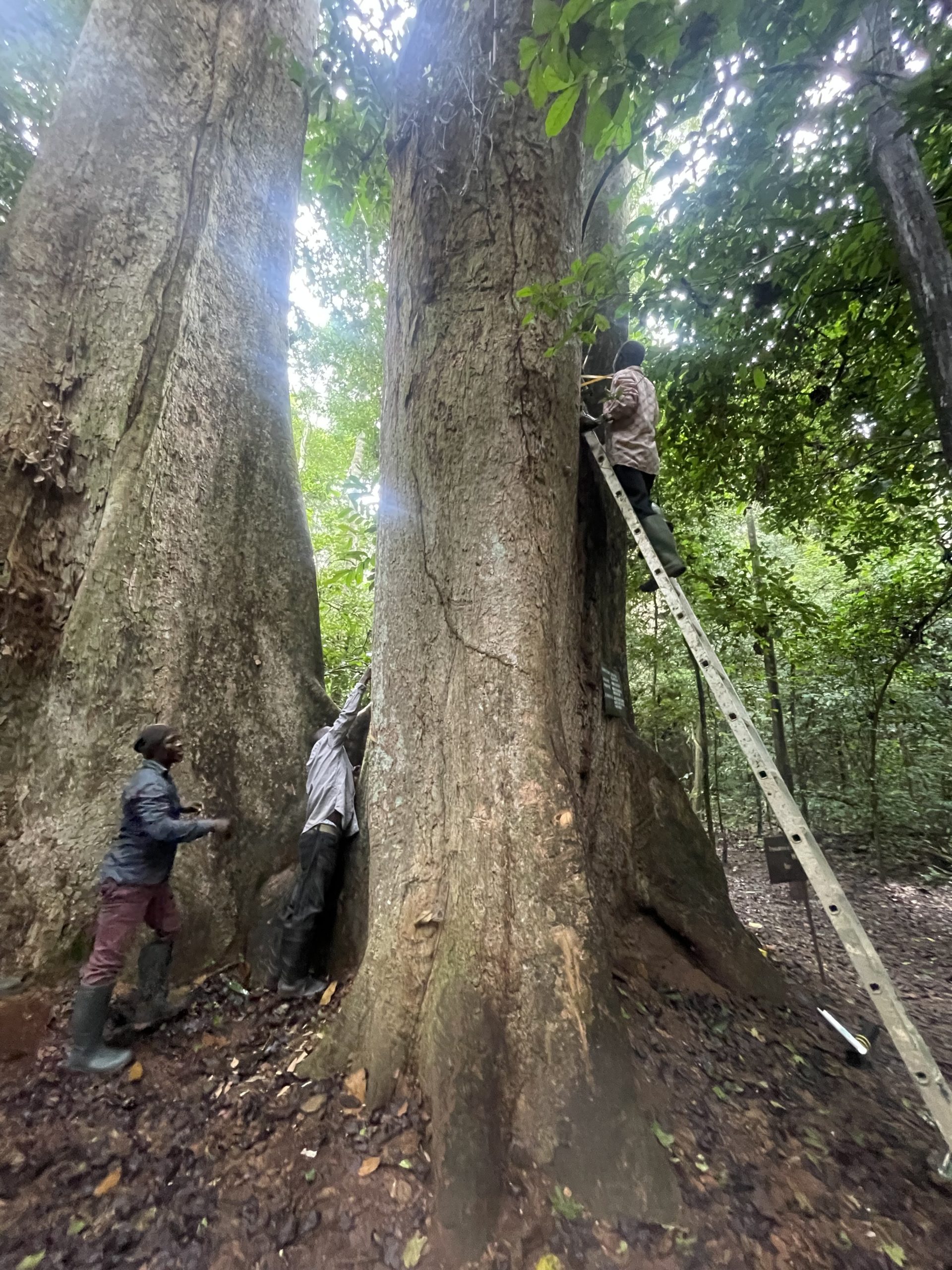
Based in Kumasi and hosted by Dr Stephen Adu-Bredu (Chief Research Scientist) at the Forestry Institute of Ghana (FORIG), Gavyn worked alongside Assistant Research Scientist Emmanuel Amponsah Manu and a dedicated local team. Fieldwork took place in Bobiri Forest Reserve and Ankasa Game Reserve, where surveys focused on lightning-struck trees to assess patterns of mortality and non-lethal damage. Work included detailed canopy assessments, radial tree and flashover surveys, identification of potential lightning scars, and soil sampling around affected trees.
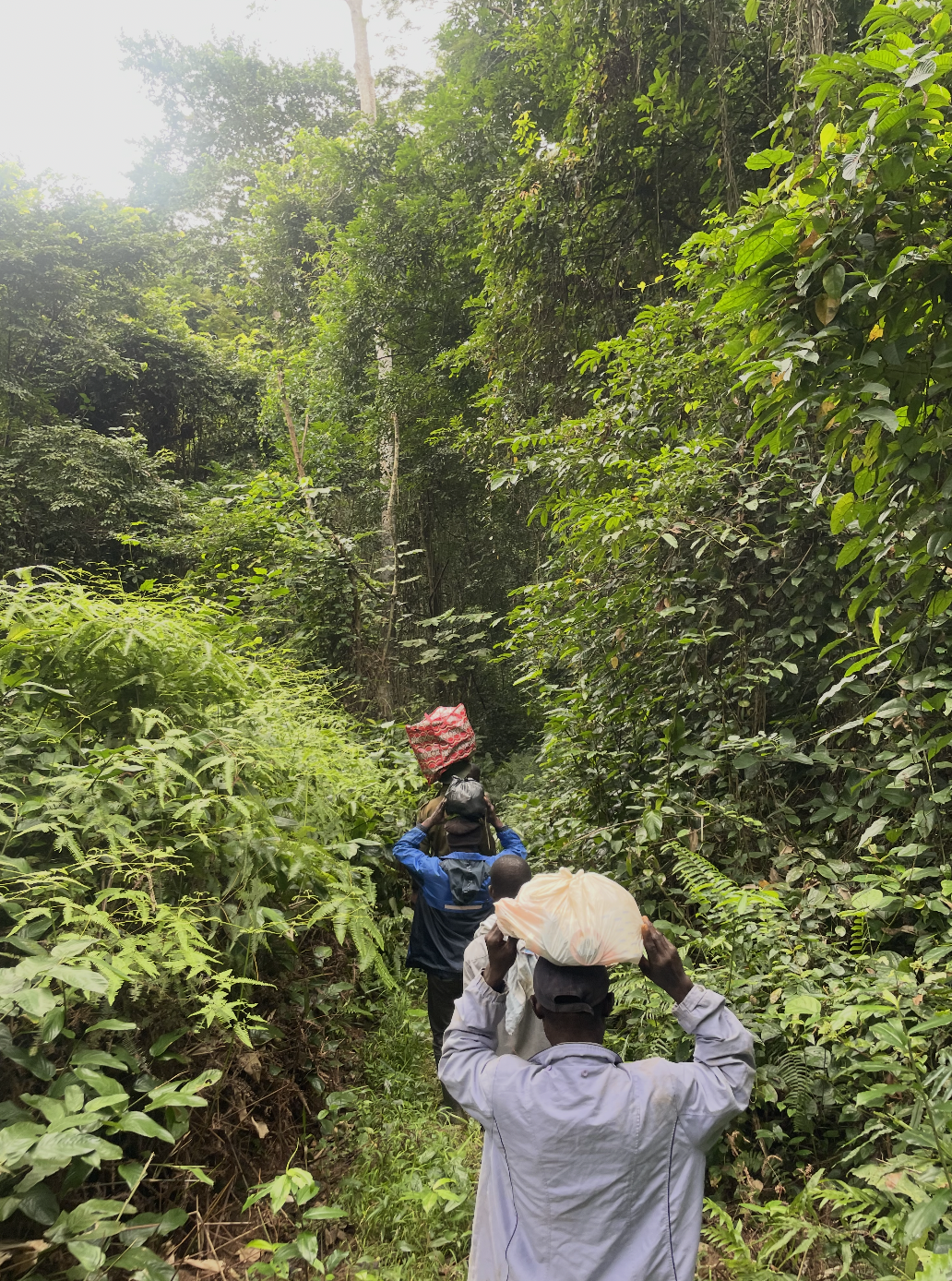
Soil samples collected during the fieldwork will be analysed at the University of Exeter and the University of Helsinki to investigate lightning-induced remanent magnetism (LIRM), a potential geochemical marker of past lightning strikes that could help scientists reconstruct the history of lightning disturbance in tropical forests.
At Ankasa, surveys were conducted within a 50-hectare monitoring plot established by FORIG in collaboration with the Africa Lightning Project, which uses novel technology to identify lightning-struck trees. Post-strike surveys were completed around 25 trees in challenging, steep terrain, with 20 control trees surveyed for comparison. The fieldwork benefited from the expertise and support of James Boadu, Oware Samuel, Cosmos Awuah, Gabriel Sie-Yaw, the Ghana Forestry Commission, and Ankasa Park Manager Bona Kyiire.
Data from Ghana are now being analysed alongside complementary datasets from Nigeria to build improved estimates of lightning-induced tree mortality across tropical Africa. The next phase of the project will investigate magnetic signatures of lightning in soils and examine how future increases in lightning frequency under climate change may alter forest disturbance regimes and carbon stocks.