
Posted by Ted Feldpausch
27 March 2026The conversion of forest to agriculture in the Amazon triggers a “deforestation multiplier”: the ecosystem loses carbon equivalent to about 1.2 times the original forest’s aboveground biomass. Current carbon-credit standards such as Verra’s Verified Carbon Standard (VCS) focus on standing timber, yet new evidence highlights the significant, unprotected carbon stocks remaining in the soil of burned forests.
Read the full policy brief below:
This brief pairs with Andean Soil Carbon: The Deep Pool, Still Uncredited, which shows how much carbon Colombian Andean forest soils hold and why its fire-derived fraction is unusually durable. Together they cover both sides of the question: what disturbance takes from the soil, and what stays behind.
Reference:
Naval, M. L. M., Bieluczyk, W., Alvarez, F., Carvalho, L. C. da S., Maracahipes-Santos, L., Oliveira, E. A. de, Silva, K. G. da, Pereira, M. B., Brando, P. M., Marimon Junior, B. H., Camargo, P. B. de, & Feldpausch, T. R. (2025). Impacts of repeated forest fires and agriculture on soil organic matter and health in southern Amazonia. CATENA, 254, 108924. https://doi.org/10.1016/j.catena.2025.108924
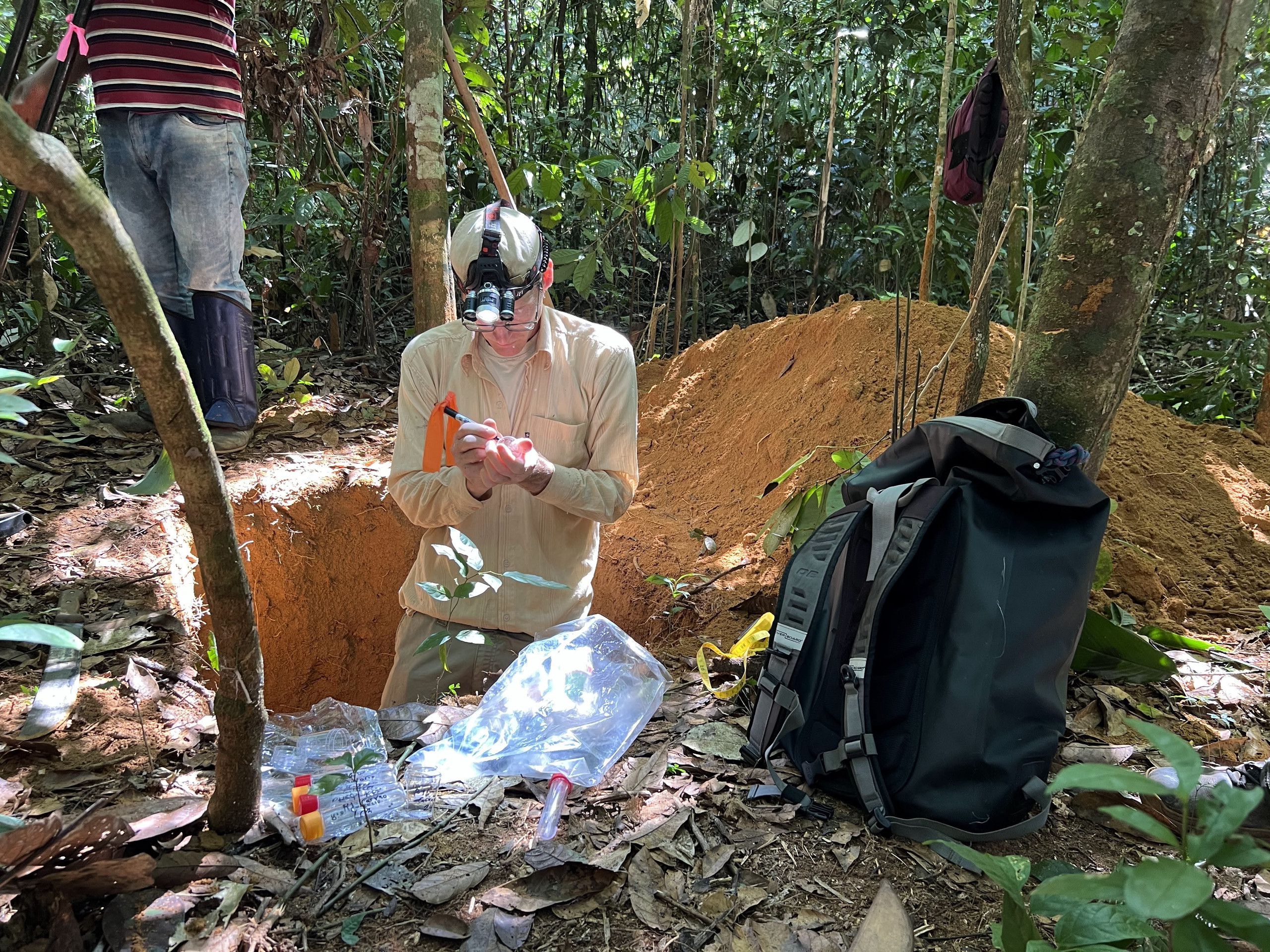
Header photo: Karina Gonçalves. Soil sample collected on an auger during Amazon PyroCarbon fieldwork.