
Heidi Affi, a doctoral researcher in the Institute of Arab and Islamic Studies, reflects on what emerged when her project was subjected to unexpected delays.
Heidi, your research focuses on north-eastern Syria. What are you exploring?
I’m from the Jazira region of Syria, which is the Syrian chunk of Upper Mesopotamia. It’s separated from the rest of Syria by the Euphrates. Al Jazira directly translates to ‘the island.’ I’m exploring how land, memory and art intersect in a region shaped by successive waves of violence and resistance towards the land and its various peoples. Many different groups constitute the Jazira. It’s positioned, at least to the Syrian and Turkish nation-states, and their colonial predecessors, as a periphery or margin territory. I’m curious as to how expressions and practices of memory detail, respond, and possibly move beyond that peripheralization.
You’ve encountered some delays which you’ve used creatively to develop a ‘digital ethnography’ – what does that involve?
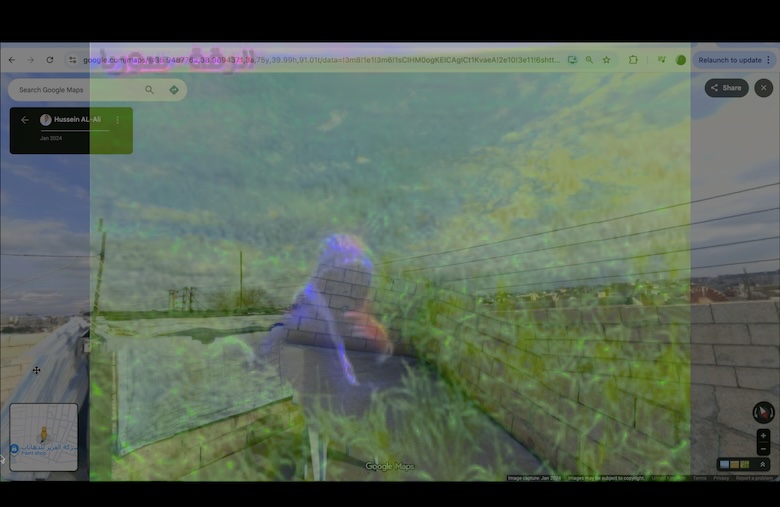
I’ve had a delay in ethics approval as well as an injury (and subsequent surgery) that destabilized my mobility for months. While this has mainly not been fun, I got to encounter new avenues + sites of research. My online archival work (meant to explore relationships to land in the Jazira) shifted to include contemporary, user-generated materials on YouTube.
I’ve been working with folk and shaabi music from the region as an embodied transmission site of history and life. Particularly displacement, migration, agriculture, social life, entertainment, folklore, and more. It’s been so great watching old and new music videos, archival family weddings, people gathered for dabke or rababa sessions, folks singing mawwals.
This helps add a significant layer to materials collected by Jazrawis themselves that responds to discriminatory state national representations and even well-intentioned international ethnographic or anthropological documentation. Such ‘user-generated’ contemporary materials embellish archives, demonstrating the deeply intertwined cultural practices with the landscape in the historic instance. From an online or remote access standpoint, these videos are critical to engaging with how Jazrawis record and share aspects of themselves publicly. Syrians’ usage of the internet , both in war documentation and as a means of connecting during and after the war, is fascinating, so it feels right to tap into this approach.
Waiting in prolonged limbo for ethics approval for your project can be a difficult experience for postgraduate researchers. What are your reflections on this waiting time?
My advice: get started way earlier. All PGRs who have fieldwork should begin their ethics process in their first term. I’m not kidding. It can take six months or more, depending on the scope of your plans, so if you want to start fieldwork at the outset of your second year, get started early.
Another experience that many doctoral students will recognise is needing to adapt your plans due to a period of illness or disability. Are you happy to share what happened to you and how it affected your work?
(Warning : injury description). I got in a nasty Lime bike crash in August 2025 and had to get the inside of my knee reconstructed on multiple fronts. It’s been a very interesting journey. I’ve been very privileged to access care and support throughout, but being disabled for about 6 months is still just a difficult experience. I learned a lot about how I move through the world, how ableist public space can be (and how ableist people + institutions can be!) and how to manage a very different pace of life. I first felt a bit ashamed that it took a debilitating injury to open my eyes to this layer of many people’s struggle and added oppression. These ableisms are fundamentally intertwined with race, class and imperialism – and really highlight their operating mechanisms. And these are just reflections as someone without dependents and who lives a very privileged life!
Obviously, my work slowed down significantly but I also deepened my reading practice and enjoyed all the online exploration. The waiting led me to a richer digital research practice. I’ve encountered a data set that I truly didn’t expect; one which asks me to expand both my methodological and theoretical approaches. As an interdisciplinarian, I couldn’t ask for more.
Image: Digital ethnography: screenshots from a Raqqa, Syria street view and video collaged on top of each other – Heidi Affi.
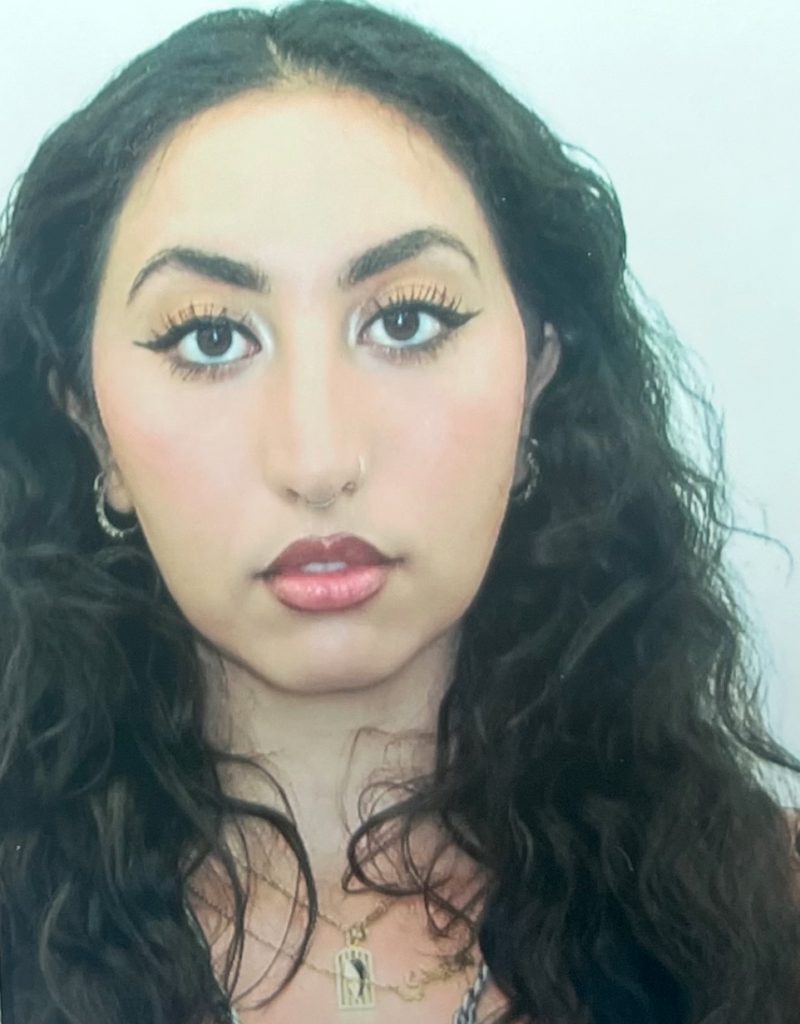
Heidi Sarah Affi is a Syrian American artist-researcher, writer, and cultural practitioner working across experimental arts, radical ecologies, and political memory. Her wider practice is grounded in visual and embodied storytelling emerging from marginal spaces and political movements. Through collaborative research, publishing, and interdisciplinary cultural programming, her work explores counter-memories, surrealism, embodied geography, and relations to the earth. She also brings nearly a decade of experience working with environmental justice organisations across the US and UK, with a focus on community-led practice, sustainable development, and liberatory pedagogy.
Heidi holds an MSc in Human Rights and Politics from the London School of Economics and Political Science and is currently an AlQasimi Scholar undertaking a PhD at the University of Exeter. Her research focuses on Syrian memories in the Jazira region through land, art, and alternative political imaginaries. She is also a published author and co-founder of Azl, a digital publication of politics and art, and Surreal Maps, a performance lecture series and research platform.