
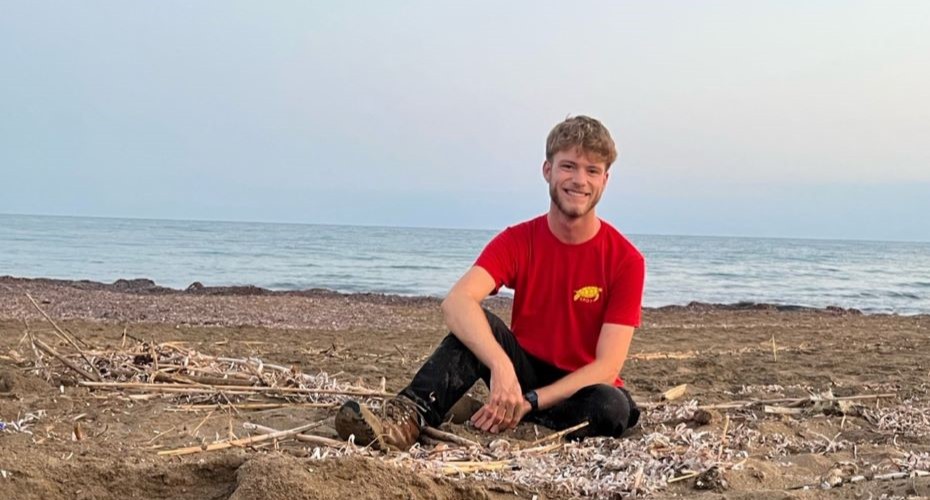
Ethan Hunt (MSc Marine Vertebrate Ecology and Conservation, 2025)
Sea turtle biologist and CoralWatch Ambassador
For a place without turtles, Cornwall seems to have the turtle research.
When I arrived at the University of Exeter’s Penryn Campus to study my MSc in Marine Vertebrate Ecology and Conservation, I was focused on building a pathway into sea turtle research. I saw my Masters as a stepping stone towards becoming a sea turtle biologist. Since graduating, I’ve worked with four species of sea turtle across three continents, all in less than one year.
Why the University of Exeter, and why Penryn?
I chose Exeter as a university because of its reputation in ecology and conservation. For anyone interested in wildlife and environmental science, studying at one of the top-ranked institutions in the world for ecology was a pretty compelling reason to apply.
Despite this, as someone who grew up in a city, the idea of moving to Cornwall initially terrified me. I genuinely wondered whether there would be anything to do there. Would I spend a year staring at fields? Would civilisation end somewhere around Bristol?
What I quickly discovered was the exact opposite.
There always seemed to be more happening in Falmouth in a month than during an entire year of my undergraduate degree at Lancaster University. From the Falmouth Oyster Festival in October, through spring cider festivals, to the Sea Shanty Festival in June, Cornwall always seemed to have something going on.
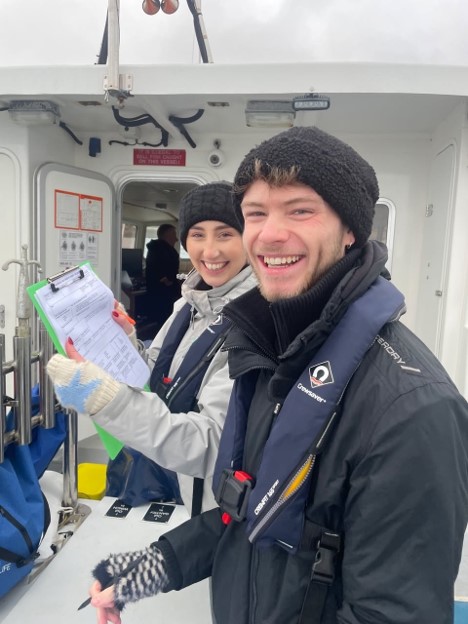
Falmouth also offers something unique for ecology students. I regularly went snorkelling along the coast, encountering octopus, catsharks, nursehounds, and an incredible variety of marine life. Boat trips often brought sightings of minke whales, common dolphins, and harbour porpoise.
And then there was dissertation season. While friends elsewhere in the UK were battling grey skies and endless rain, I often found myself analysing data in a sunny beer garden overlooking crystal-clear water. It made statistical modelling slightly more bearable.
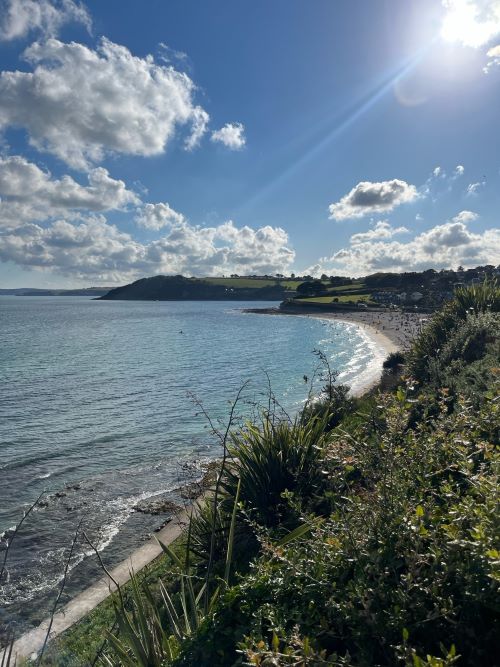
Taken together, the coastline, constant stream of events, and an ever-present supply of Cornish cider created a university experience unlike anything I had experienced before.
Developing skills that employers value
One of the things I valued most about my MSc was how practical it was.
Alongside a strong grounding in marine vertebrate ecology and conservation, the course focused heavily on developing skills directly relevant to conservation careers.
The GIS in Ecology and Conservation module provided hands-on experience with spatial analysis tools widely used in ecology and environmental consultancy. GIS has come up repeatedly in job applications and interviews since graduating.
The Conservation Practice and Evidence module introduced conservation grant writing and gave insight into how conservation organisations secure funding and deliver projects in practice.
The course also strengthened my skills in statistical modelling using R, scientific writing, research design, data management, and evidence-based decision-making.
My dissertation, supervised by Professor Annette Broderick and Dr Liliana Poggio-Colman, investigated the effects of natural shading on green sea turtle nest outcomes. Beyond developing technical skills, it gave me direct experience of the research process from design through to manuscript preparation.
Support Beyond the Classroom
The support available at Exeter extended well beyond lectures and lab work.
During my MSc, I participated in the Pathway to Charity and Events programme, which included a week-long paid internship with Borneo Nature Foundation International. There I conducted a competitor analysis for the organisation, gaining insight into how conservation NGOs operate and developing experience outside pure field ecology.
One of the most important lessons I learned at Exeter is that opportunities often come through people rather than formal applications.
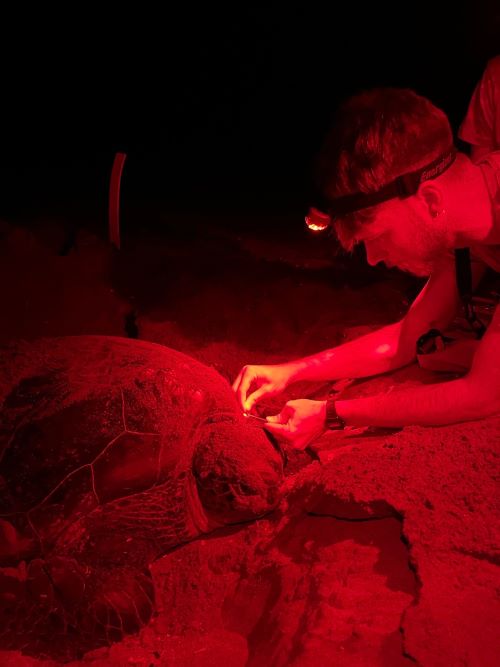
Through Professor Annette Broderick’s long-standing involvement with the Society for the Protection of Turtles (SPOT) in Northern Cyprus, I was able to join the project during my MSc. That experience became one of the most influential parts of my degree and the foundation for much of what followed.
Following the turtles around the world
Working with SPOT introduced me to sea turtle conservation in practice. Long nights on nesting beaches, collecting scientific data, monitoring nesting activity, and contributing to long-term research confirmed that this was the career path I wanted to pursue.
And then, not long after submitting my dissertation, I was on a plane to Australia.
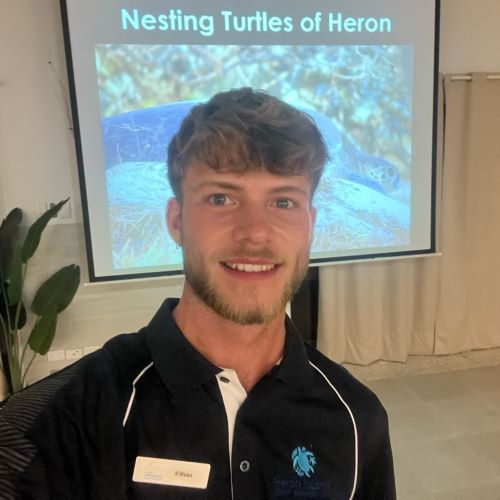
I joined Heron Island as a Naturalist and Ecology Field Guide, living and working on a remote coral cay in the southern Great Barrier Reef. At just 800 metres long and 300 metres wide, it was a very different world from England.
I quickly learned that living on a small island with over 100,000 nesting seabirds means you should expect to be pooped on multiple times a day. Fortunately, Heron Island more than compensated.
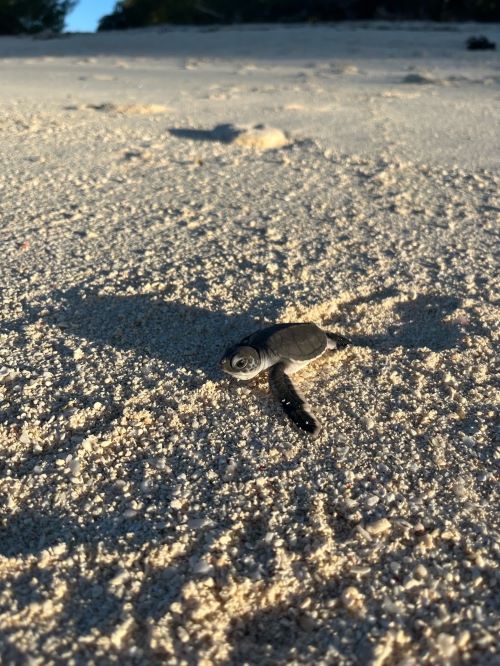
On any given day I might see manta rays gliding over ancient coral, bottlenose dolphins cruising past the reef crest, eagle rays leaping from the water, resident green sea turtles surfacing beside the jetty, or even a great hammerhead patrolling the lagoon.
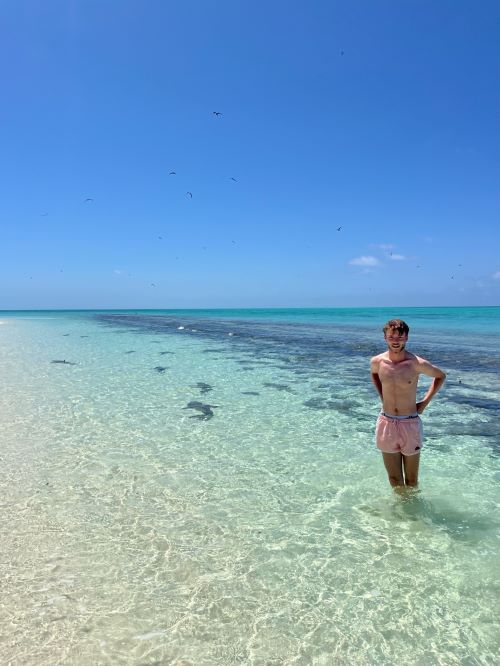
The role combined conservation, education, and research. I delivered marine ecology presentations to international audiences, designed and implemented a permit-approved turtle nesting walk programme, trained staff in turtle monitoring protocols, and contributed to Queensland’s state turtle monitoring programme throughout an entire green and loggerhead sea turtle nesting season.
One of the most memorable moments was witnessing the annual coral spawning event. For a few nights each year, corals synchronise the release of eggs and sperm into the water column, creating one of the most remarkable natural events I’ve ever seen.
What stood out most, however, was how directly applicable my MSc training was. Whether communicating science, collecting data, or designing outreach programmes, I regularly drew on skills developed at Exeter.
Brazil and the power of connections
After Australia, my sea turtle journey continued in Brazil.
Following graduation, I stayed in contact with my dissertation co-supervisor, Dr Liliana Poggio-Colman. Through that connection, I had the opportunity to work with Projeto TAMAR in Bahia, one of the world’s leading sea turtle conservation organisations.
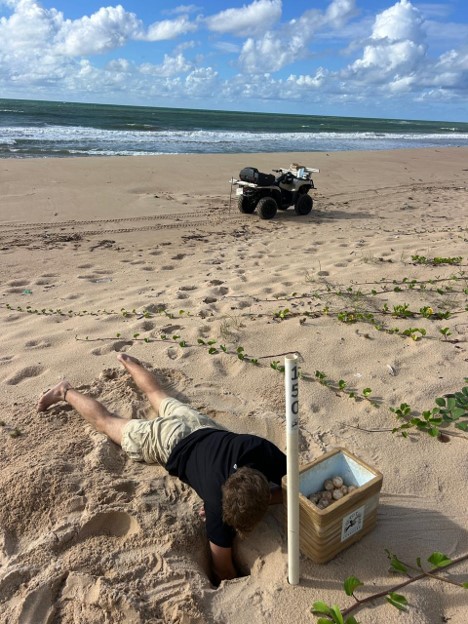
There I assisted with nesting beach surveys, hatchery management, nest relocations, post-hatching excavations, and stranding response activities involving Olive Ridley, hawksbill, and loggerhead sea turtles.
It reinforced something I had already begun to realise: the relationships built during university do not end at graduation. In many cases, they are exactly what shape what comes next.
Returning to Cyprus and progressing in my career
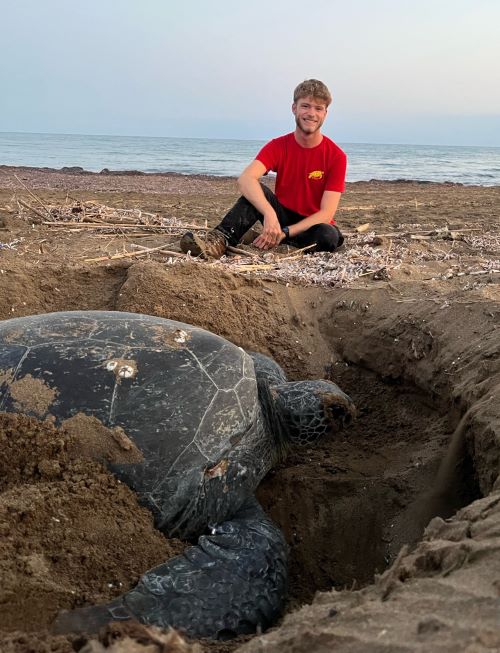
Most recently, I returned to Northern Cyprus for a second and more extensive season with SPOT.
This time, the experience felt very different. The student who once arrived to gain experience is now helping others do the same.
I am currently training as a Beach Leader, taking on greater responsibility for volunteer mentoring, team coordination, and maintaining high standards of data collection and animal welfare.
One of the most rewarding aspects has been working alongside new cohorts of Exeter MSc students each year. It feels like only yesterday I was in their position, and now I find myself supporting them through many of the same challenges and experiences.
Advice for students and businesses
If I could give one piece of advice to prospective students, it would be to remember that university is about far more than building an academic portfolio. The knowledge and skills you gain are important, but so are the relationships you build along the way. Many of the opportunities that have shaped my career can be traced back to conversations, mentorship, and connections made during my time at Exeter.
For organisations considering working with Exeter students, my experience is proof of what can happen when students are given opportunities to apply their skills in real-world settings.
What began as a move to Cornwall for a one-year MSc has since taken me to nesting beaches in Northern Cyprus, a coral cay on the Great Barrier Reef, and a sea turtle conservation project in Brazil. Not bad for ‘just’ a stepping stone.