
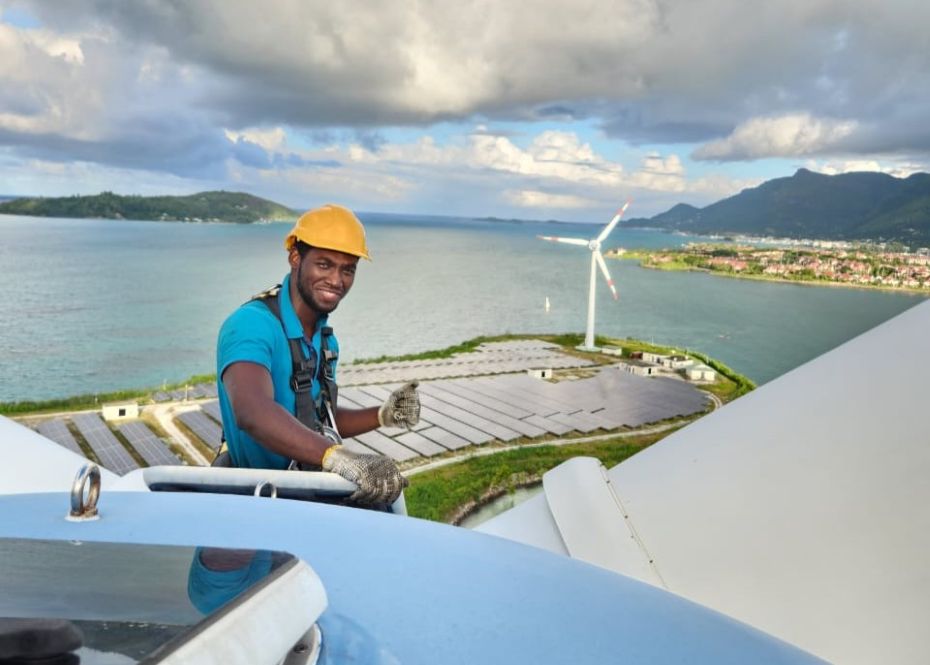
Gino, studied BSc Renewable Energy (2020)
I knew I wanted to work in renewable energy from when I was young. For my A-levels, I studied maths, physics and geography, and it was through geography that I first learned about climate change, fossil fuels and the global transition towards cleaner energy following the Paris Agreement. It made me realise I wanted to combine my passion for engineering with my interest in geography and sustainability.
When I started researching universities, I found that most engineering degrees only offered renewable energy as a specialism within mechanical or electrical engineering. Exeter stood out because it offered a degree dedicated entirely to renewable energy technologies. That really excited me. I wanted to immerse myself in the subject, learning not just about engineering but also the technologies, industry and wider energy landscape.
Coming from the tropical islands of the Seychelles to Cornwall was definitely an adventure.
I’ll admit something funny… I didn’t realise the Renewable Energy programme was based at the Penryn Campus. I thought I’d be studying in Exeter itself! I even liked the idea because, as a big Manchester United fan, I’d heard there were direct train links to Manchester and imagined regular trips to Old Trafford.
Instead, after arriving in the UK, we drove past Exeter and kept heading further south. I remember asking the driver, “Where are we going?” When he told me we were heading to Cornwall, it was a bit of a surprise!
At first I wondered what it would be like. People kept telling me Cornwall had beautiful beaches, and I remember thinking, “But I’m from the Seychelles!” But what I quickly realised was that Cornwall offered something completely different.
It gave me the chance to experience authentic British and Cornish culture. I fell in love with Cornish pasties and still miss them today. I enjoyed proper fish and chips, the quieter pace of life and living by the sea. It felt like I was experiencing a traditional side of the UK that many international students might never get to see.
I also saw snow for the first time!
Coming from the tropics, I’d only ever seen snow in films. Everyone had told me Cornwall rarely gets any, so I’d accepted I probably wouldn’t experience it. Then, during my first December, a snowstorm arrived. I couldn’t believe my luck. It was one of those unforgettable memories that still makes me smile.
One of the things I liked most about the programme was how practical it was. We worked on real-world projects rather than just learning theory. We carried out renewable energy assessments, worked on wind energy planning projects and even presented our findings to a local council.
Another highlight was carrying out practical work at testing facilities near Falmouth and completing an energy audit for a local Cornish business as part of our Energy Management module. These experiences gave me confidence because they reflected the kinds of challenges engineers face in industry. Unfortunately, COVID meant we couldn’t travel to Scotland for our final-year project as originally planned, but despite that disappointment, I still look back on the course incredibly positively.
The lecturers were knowledgeable, supportive and really encouraging. Even after graduating, I’ve stayed in touch with several of them and still reach out for advice when I need it. That ongoing sense of community is something I’ve really appreciated.
Another thing I particularly valued about Exeter’s programme was that it covered both the technical engineering aspects and the policy side of renewable energy. It gave me the flexibility to choose my own career path after graduation. I decided to follow the technical route, but I also understand how important policy is. Successfully transitioning to renewable energy requires engineers and policymakers to work together, and I think that combination will become even more important in the years ahead.
Today, I’m back home in the Seychelles, working as a Wind Turbine Maintenance Engineer for the country’s utility company. My role involves maintaining our wind farm, carrying out routine and preventative maintenance, and ensuring the turbines continue operating safely and efficiently.
The Seychelles is still at the beginning of its renewable energy journey. At the moment, most of our electricity still comes from diesel generators, but the country has ambitious renewable energy targets and exciting projects underway, including floating solar developments.
As a small island nation, we face unique challenges. Land is limited, wind resources are modest and many potential sites come with environmental or aviation constraints. That means every renewable energy project requires careful planning and technical expertise.
It’s incredibly rewarding to be applying what I learned at university to help support the Seychelles’ transition towards cleaner energy. Knowing that my degree is helping me contribute to my country’s future is something I’m very proud of.
For anyone considering studying renewable energy, I’d absolutely recommend it. The sector is growing rapidly across the world, creating opportunities not just for engineers, but for people working in policy, planning, research and innovation. Most importantly, it’s a chance to contribute to something bigger than yourself. That’s what inspired me when I first left the Seychelles for Cornwall, and it’s what continues to inspire me every day in my career.