

Hello everyone,
My name is Linh, and I am currently pursuing a Masters degree in International Education at the University of Exeter. Like many international students, I arrived in the UK carrying a mixture of excitement, curiosity, and, if I am honest, a fair amount of uncertainty. Studying at a Russell Group university had always felt like a great academic honour, but it also came with many questions. Would the programme be too challenging? Would I be able to keep up with lectures and coursework? Above all, I kept asking myself one important question: would the curriculum live up to my expectations?
After spending time here, I found that the answer was yes. The University of Exeter is widely recognised as one of the leading universities not only in the UK but also worldwide. Many people talk about how demanding the courses are, and that is certainly true. However, there is one aspect of Exeter that I believe remains underestimated, even among prospective students: its approach to teaching and learning.
As someone with a background in education, I have been exposed to a range of teaching methods and pedagogical theories. Yet, I still found myself genuinely surprised and deeply impressed by the diversity, creativity, and intentionality of teaching practices here. So, through this blog, I would like to share some of the most meaningful aspects of teaching and learning at the University of Exeter, and how they shape the way international students adapt, grow, and thrive.
1. Learning Through Cooperation
One of the most striking features of my learning experience at Exeter is the strong emphasis on cooperation. I remember a conversation with one of my lecturers who teaches a module on technology in education. She shared that before designing the course, she consulted leading technology companies in the UK to understand what skills they look for in potential employees. Interestingly, the answer was not just technical expertise, but cooperation: teamwork, communication, and the ability to engage in meaningful dialogue. This philosophy is clearly reflected in the design of our classrooms. The learning spaces are open and flexible, with movable tables and chairs that encourage collaboration rather than passive listening. Screens are positioned throughout the room so that no matter where you sit, you are part of the conversation.

Sometimes, this approach is even more interesting: how collaboration often extends beyond the traditional classroom setting. There were moments when my classmates and I were literally on the floor, brainstorming, sketching ideas, building prototypes, or trying to make sense of complex concepts together. It may sound chaotic, but it is one of the most freeing, engaging, and memorable learning experiences I have ever had.

For many international students, including myself, this approach requires a shift in mindset. We are no longer just individuals trying to achieve good grades; we become part of a learning community. We learn how to listen, negotiate, challenge, and support each other.
2. A Culture of Open Dialogue
Coming from Vietnam, a country with a strong tradition of respect and formality in education, speaking up in class used to feel intimidating. Questioning a teacher, or even expressing a different opinion, often felt like crossing an invisible line. However, studying at the University of Exeter has completely transformed this mindset.
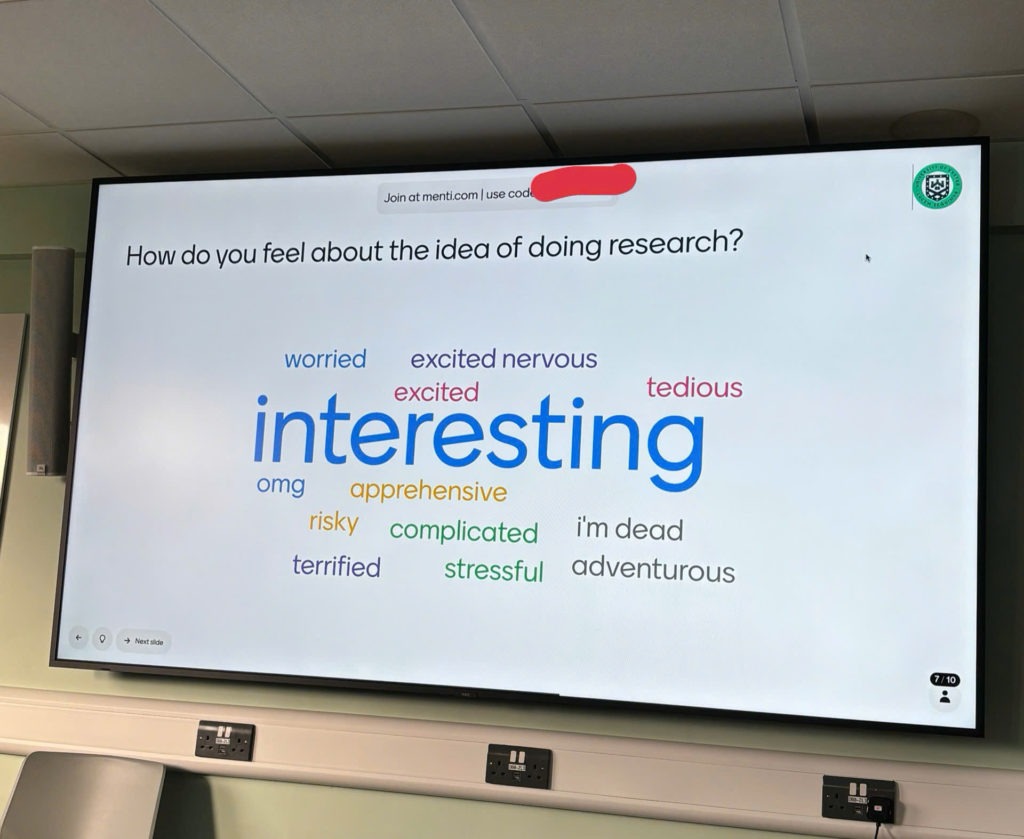
In most lectures and seminars, it is common for lecturers to pause every 10 to 15 minutes to ask questions such as “Does this make sense?”, “What do you think about this idea?”, or “Do you agree or disagree?”. At first, I hesitated. I worried that my questions might sound too simple, or that my ideas might not be “good enough”. But what surprised me the most was the way lecturers responded. Every question is welcomed. Every contribution is acknowledged. And more importantly, curiosity is celebrated. There were moments when I asked questions that I thought were quite basic, yet my lecturers responded with genuine enthusiasm, sometimes even saying, “That’s a really important question.” This culture of open dialogue has helped me grow both academically and personally. It teaches international students that their voices matter, that learning is not about being perfect but about being engaged. And over time, I found myself asking more questions, challenging ideas, offering perspectives, and participating in discussions with a sense of ownership.
3. Theory-Rich Learning
When people hear about “student-centred learning”, they sometimes assume that it means less structure or fewer lectures. However, my experience at Exeter tells a very different story. Yes, the learning environment is highly interactive and student-focused. But at the same time, it is also deeply academic and theory-rich.
Like many Russell Group universities, Exeter expects students to engage with a significant amount of reading and academic material. Each week, we are introduced to a range of theories, frameworks, and research studies that form the foundation of our learning.
But what makes this experience different is the way lecturers guide us through this complexity. At the beginning of each session, lecturers often take time to unpack key theories, clarify difficult concepts, and connect them to real-world contexts. They do not simply assign readings and expect us to figure everything out on our own. Instead, they act as guides, helping us navigate academic literature, evaluate sources, and develop critical thinking skills.
For me, this approach feels incredibly supportive. Rather than feeling overwhelmed by the volume of knowledge, I feel guided. I feel that there is a clear direction, a sense of purpose behind every reading, every discussion, and every assignment. As an international student, this guidance is especially valuable. It helps bridge the gap between different educational systems and ensures that we are not just consuming knowledge, but truly understanding and applying it.
4. The Power of Field Trips
Another aspect of studying at Exeter that I truly cherish is the opportunity to learn beyond the classroom. On days when the weather is kind (which, in the UK, feels like a small blessing in itself), classes sometimes take place outdoors or include field trips. These experiences bring learning to life in ways that traditional lectures simply cannot.
One of my most memorable experiences was a field trip to Okehampton. During this trip, we explored the landscapes of Dartmoor and learned about the myths and histories surrounding the River Ex. But more than that, we engaged in what our lecturers described as “embodied learning”.

Instead of just reading about theories, we experienced them. We observed, reflected, discussed, and then applied our knowledge by designing our own small projects based on what we had learned. There was something incredibly powerful about standing in a place, feeling its atmosphere, and connecting it to academic ideas. It made learning feel alive, personal, and meaningful.
For international students, these experiences also offer a deeper connection to the local culture and environment. They allow us to see the UK not just as a place of study, but as a space of exploration and inspiration. This balance between interactive learning and deep academic engagement is what makes Exeter’s teaching style so unique.
5. Between Deadlines and Daydreams
Despite the academic rigour and high standards of the programme, life at Exeter is not all about studying. One thing I truly appreciate is the balance between academic work and student life. The University, academic departments, and the Students’ Guild regularly organise a wide range of activities and events, giving students many opportunities to relax, meet new people, and enjoy their time outside the classroom.
This balance has made a real difference to my experience. Even during busy periods filled with deadlines and assignments, I have never felt overwhelmed by stress. There was always something to look forward to, whether it was a social event on campus, a creative workshop, or a trip with friends. These moments of connection and enjoyment helped me recharge and return to my studies with renewed energy.

Final Thoughts
The University of Exeter offers many things to love: its campus, its community, its academic reputation. But for me, one of the most meaningful aspects of my experience has been its teaching and learning approach. It challenges you, supports you, and most importantly, transforms you.

As an international student, adapting to a new academic culture is never easy. But at Exeter, this adaptation becomes a journey of discovery. You learn not only about your subject, but also about yourself, how you think, how you communicate, and how you grow.
If you are considering studying here, I can say this with confidence: one of the reasons you will fall in love with Exeter is the way it teaches. Because here, learning is not just something you do. It is something you experience.