

Posted by Ted Feldpausch
17 July 2026Lorena de Souza Fleury has completed her MSc at the Instituto Nacional de Pesquisas da Amazônia (INPA) in Manaus, examining what happens to carbon in Amazonian secondary forests two and a half decades after they were fertilised. Her thesis, “Legado da fertilização do solo sobre a biomassa aérea e a matéria orgânica do solo em florestas secundárias na Amazônia Central” (The legacy of soil fertilisation on aboveground biomass and soil organic matter in secondary forests in Central Amazonia), was supervised by Prof. Ted Feldpausch (University of Exeter) and Dr Wanderlei Bieluczyk (CENA, University of São Paulo).
The work was carried out as part of the Amazon PyroCarbon Project, coordinated by Prof. Feldpausch and Prof. Plínio Camargo (CENA, University of São Paulo). Lorena’s fieldwork focused on how vegetation and soil carbon storage change as forest regrows on abandoned pasture, working across three secondary forest sites strung along the BR-174 highway north of Manaus, Amazonas.
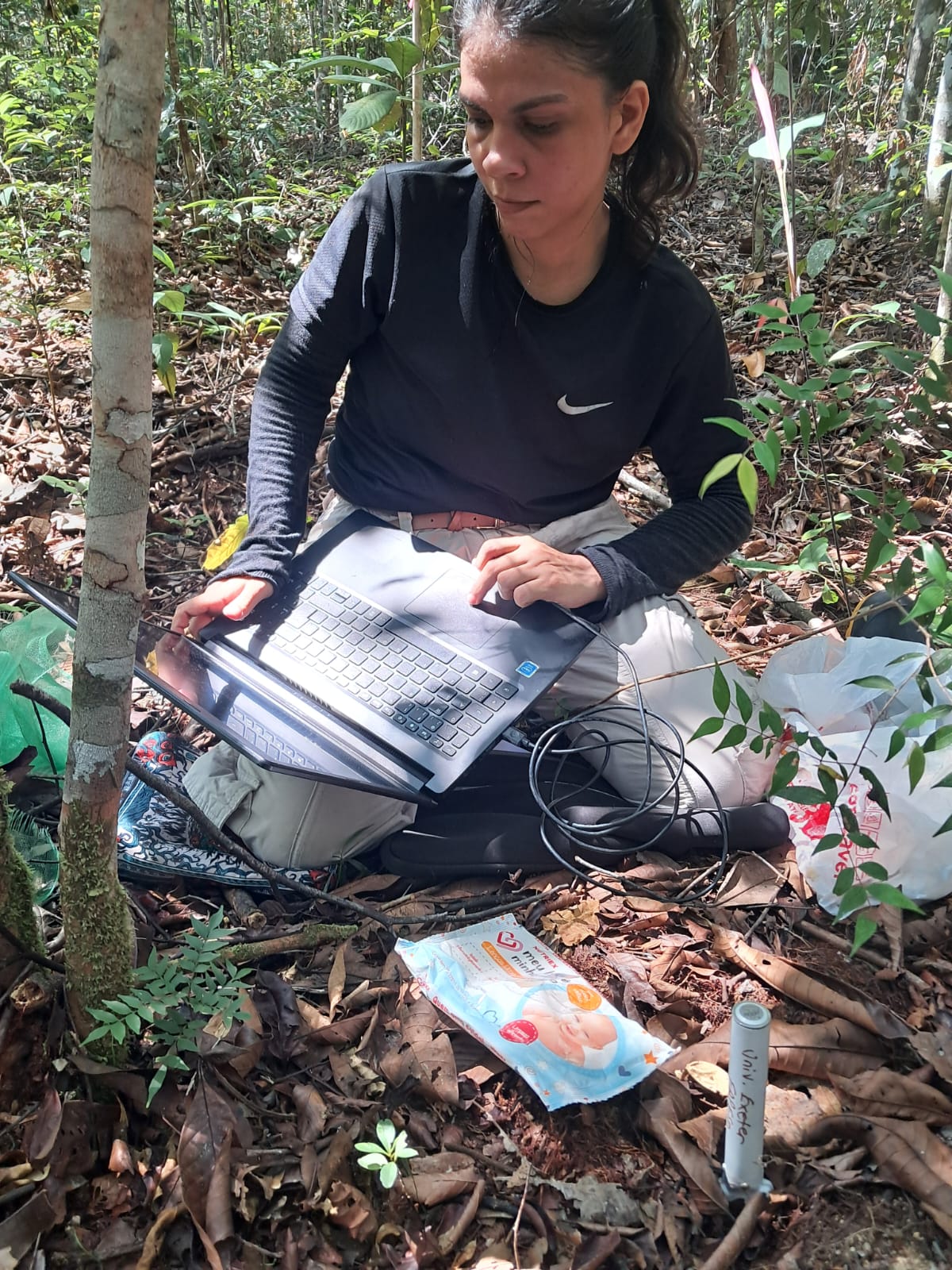
The three forests sit at different points in their recovery from cattle pasture: one younger stand of about 27 years (Fazenda Rodão) and two older stands of about 37 years (Fazenda Dimona and the Embrapa Amazônia Ocidental experimental station). All three were fertilised in November 2000, in an experiment originally established by Feldpausch and colleagues, with plots receiving phosphorus, phosphorus plus lime, phosphorus plus lime and gypsum, or no treatment at all. The aim of the original fertilisation study was to assess nutrient limitations to forest regrowth and post-pasture restoration on the degraded and nutrient-deficient soils of central Amazonia. Lorena combined five rounds of tree inventories spanning 2001 to 2025 with fresh soil sampling to a depth of 1 metre in 2025 under the Amazon PyroCarbon Project, comparing her results against the original 2000 baseline.
Twenty-five years on, forest age, not fertiliser, turned out to be what mattered most. Fertilisation gave the smallest trees an early growth boost in the first few years, but left no lasting mark on total forest carbon after two and a half decades, where the trajectory of natural succession overtook it. Carbon in the trees built up steadily and predictably over time, at 1.35 to 2.50 Mg of carbon per hectare per year depending on the site, with the older forests holding 68–74 Mg C ha⁻¹ aboveground by year 37, compared with 32 Mg C ha⁻¹ in the younger, 27-year-old stand.
The bigger story was underground. Soil carbon, measured to a depth of 1 metre, consistently outweighed the carbon held in the trees (accounting for 60–75% of the total carbon stored across these ecosystems), a pool that standard forest-carbon monitoring often overlooks entirely. The two older forests had gained soil carbon since 2000, by 10–26 Mg ha⁻¹, while the youngest forest had lost soil carbon on balance over the same period, a reminder that recovery after pasture is not guaranteed and depends on how far along the forest already is. Combining both pools, total ecosystem carbon ranged from 112 Mg C ha⁻¹ in the youngest forest up to 193 Mg C ha⁻¹ in the oldest, approaching values reported for degraded primary forest.
The findings make the case for counting soil carbon in Amazon restoration and climate policy, not just the trees, and for protecting older secondary forests specifically: after enough time, their carbon stocks start to rival those of degraded primary forest, making them a valuable and often underappreciated part of the landscape.
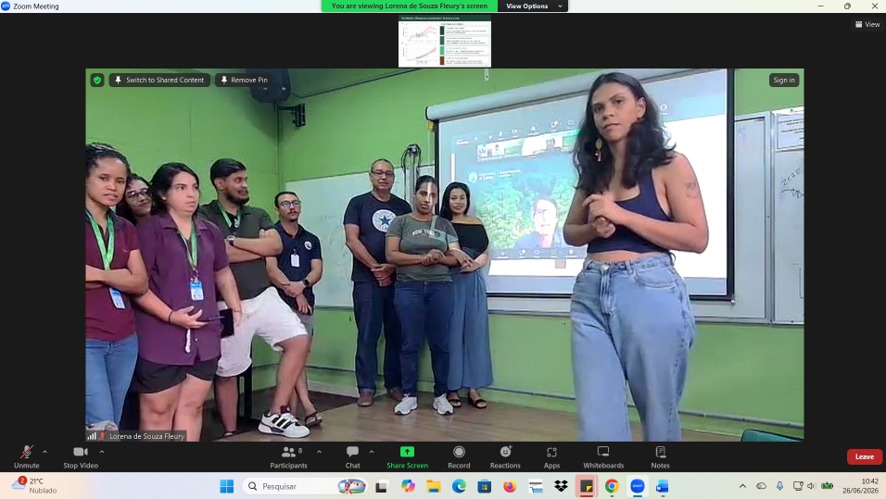
Lorena’s research drew on long-term experimental plots established by Feldpausch and colleagues in 2000 under the NASA Large-Scale Biosphere Atmosphere Experiment in Amazonia, with fieldwork support from the Projeto Dinâmica Biológica de Fragmentos Florestais (PDBFF) and Embrapa Amazônia Ocidental, soil isotope analysis carried out at the Laboratório de Ecologia Isotópica (CENA/USP), and a CNPq scholarship. She will continue to study forest carbon, composition, and microclimate. Congratulations to Lorena on completing her MSc.
Fleury, L.S., Feldpausch, T.R., Bieluczyk, W. (2026). Legado da fertilização do solo sobre a biomassa aérea e a matéria orgânica do solo em florestas secundárias na Amazônia Central. MSc dissertation, INPA. https://doi.org/10.61818/ted26055