
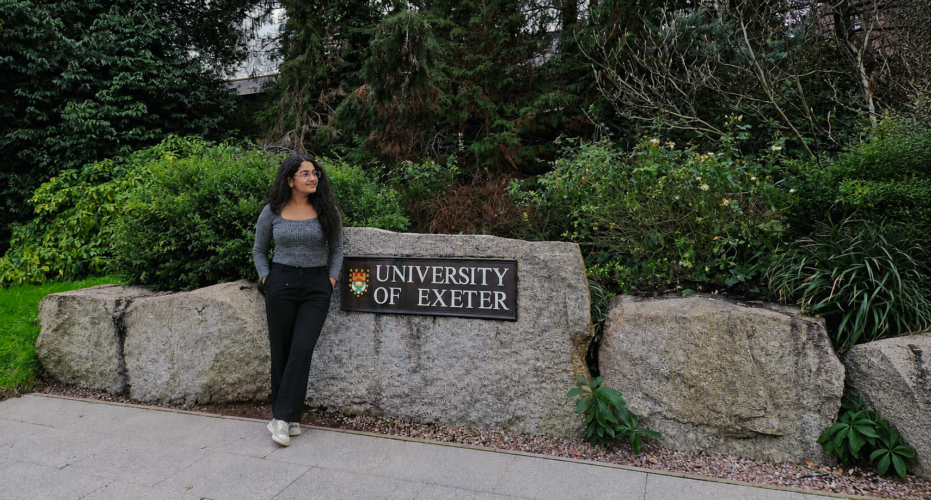
Hello readers, this is Anugrahaa currently pursuing Masters in Clinical Psychology at the University of Exeter. Psychology was a subject that got me hooked since I was in 10th grade when I read about it on a blog about Psycho-oncology. When I started studying psychology, I thought it would help me understand other people better, in terms of why they thought, felt and acted a certain way. I thought it would open a gateway to reasons behind a behaviour. What I did not expect was that it would also make me understand myself in ways I had never really thought about before.
Psychology has become more than a subject for me. It has become a way of looking at people, their pain, resilience and sometimes my own thoughts. One thing I have heard many times is that psychology is an “easy” subject because it is largely theoretical and was an optional module for those who didn’t want to do math during high school. People often assume that if a subject is not heavily practical or technical, it must be easy to study. But my experience has been very different. Psychology has made me think deeply, read carefully, question what I believe and accept that human behaviour is rarely simple to understand. The more I learn, the more I realise how much there still is to understand.
Why I chose this path
My interest in psychology came from a very simple place called “curiosity”. I have always wanted to understand why people think, feel and behave the way they do. I have also been drawn to the quieter side of human experience filled with struggles people do not always talk about, the ways they cope and the experiences that leave a lasting impact. Over time, that interest grew into psychology. I was especially drawn to clinical psychology because it felt like the place where understanding, empathy and evidence all came together. It spoke about real people, real experiences and real chances for change. That felt meaningful to me.
What I also appreciate about psychology is that it does not try to make people seem simple. It recognises that people are shaped by their past, their relationships, environment and their own life experiences. The honesty put forth by the subject is one of the reasons I connected with the subject so strongly.
What studying psychology has taught me
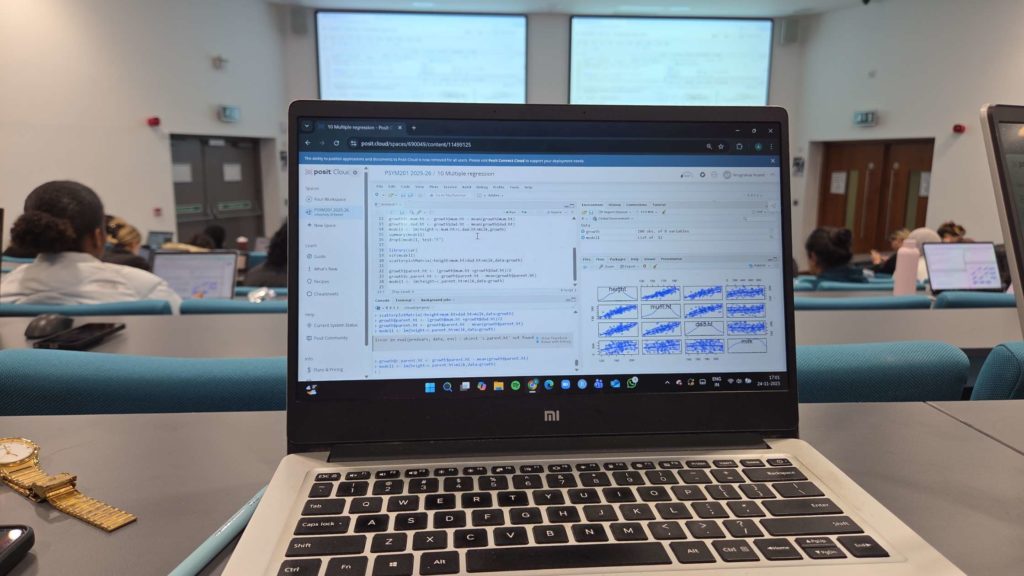
As I moved further into my studies, I realised that psychology is not a subject you can do well in just by remembering a few theories. You have to think about where the theory came from, how it was tested and whether it really fits in the real world. This has made me more careful and thoughtful in the way I learn. I like how research based psychology is. Before starting, I think I imagined it would be mostly about theories and behaviour, instead I found myself reading through journal articles, learning about research methods and trying to make sense of complicated data. The hardest was the battle between me and statistics. Every time I had to work on it I would question my life choices and whine that I should have given it a thought before choosing psychology. But, I believe if not for research with statistical interpretation and results, we would have not established conclusions on a lot of psychological findings that make sense in today’s world where mental health matters just like physical health.
It has also changed the way I look at information more generally. I no longer accept claims as they come. I find myself asking questions about the validity of the source. That way of thinking has become a part of how I learn, read and reflect.
The personal side of psychology
What makes psychology especially meaningful to me is that it never stays just academic. It always brings me back to real people, emotions and sometimes even parts of myself. Learning about mental health has made me more aware of how much people carry quietly without other noticing. It also taught me to be gentler in the way I see behaviour. I used to think people could be described simply as unmotivated, difficult, overly sensitive or impulsive. But now I understand that these labels of behaviour have a story behind them. What looks like anger may actually be hurt, distance may be exhaustion and silence may be pain. This has also made me reflect on how I respond to situations and people around me. Studying stress, anxiety, attachment and emotional regulation has sometimes felt very personal and has not been easy to deal with but has helped me grow. It has made me more aware of my own feelings and reactions and that self-awareness has become something I really value.
Challenges along the way
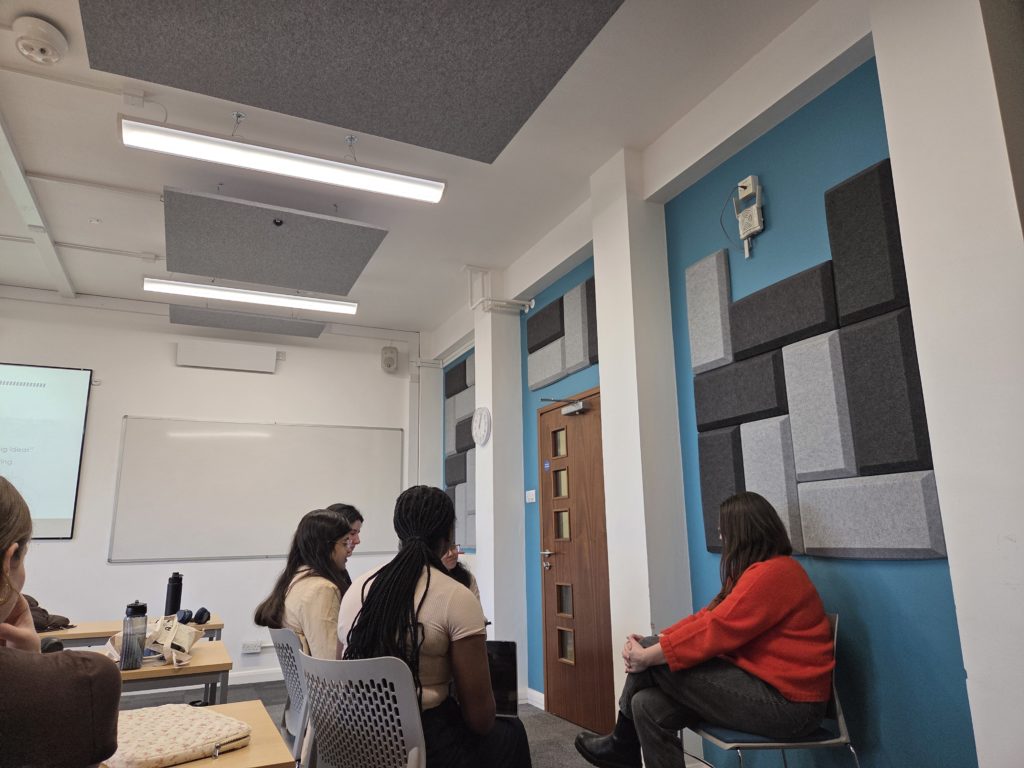
Studying psychology has not always been easy and I think it is important to be honest about that. There have been times when the reading felt endless, when statistics felt frustrating and when I doubted whether I was doing enough to be good in the field. There were also times when the emotional weight of the subject felt heavy especially when learning about distress, trauma and long-term mental health difficulties. Some of the hardest moments came when I realised how deeply I was affected by other people’s experiences. As someone who naturally feels things deeply, I found it hard not to carry the weight of what I was hearing or reading. At times, this made me question whether I was really suited to psychology, and whether being too emotional might make me unsuitable for the profession.
But over time, I began to see things differently. I learned that sensitivity is not something to be ashamed of. It does not mean I care too much in the wrong way. It means I need to be thoughtful about boundaries, reflection and self-care. I realised that being empathetic does not mean taking every story home with me. It means listening with care whilst protecting my own well-being. That shift was important for me as it helped me understand that I do not need to be less emotional to belong in the field rather I just need to learn how to use my empathy in a healthy and balanced way. This has made me feel more confident in myself and in the path I am choosing. It has also taught me that growth is not always obvious right away. Sometimes it happens quietly in the way I think, the way I listen or the way I respond to others. Looking back, I can see that studying psychology has changed me in those meaningful ways.
What I take with me
If I had to describe the journey of studying psychology so far, I would say it has been nothing less than transformative. It has definitely taught me about mental health and behaviour but it has also taught me about empathy, patience and the importance of one’s mental well-being. It has made me more thoughtful about people and my own self. I now understand that psychology is not easy simply because it is theoretical. In some ways, that makes it harder. It asks us to think about things that cannot always be measured neatly like pain, memory, identity, relationships, and healing. It asks us to hold compassion and rigour at the same time. That is not simple, but it is something I feel grateful to be learning.
As I continue this journey, I carry with me a deeper respect for how complex people really are. Studying psychology has made me more curious, more compassionate, and more aware of the world around me. Most of all, it has reminded me that behind every theory, every study, and every diagnosis is a person, with a life, a history, and a story.