
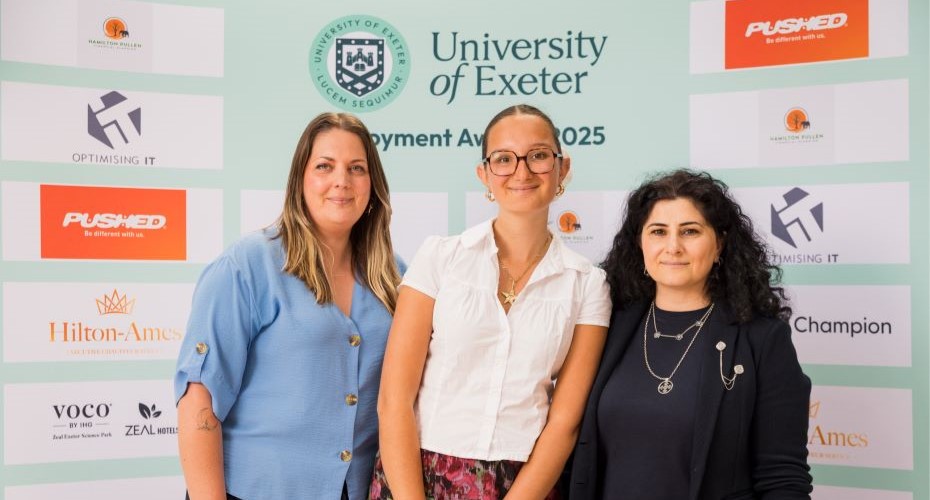
Hi, I’m Jena. I’m a final-year Politics and International Relations student at the University of Exeter. I’m originally from Paris, but I’ve spent the last few years based at the Penryn Campus in Cornwall. This blog is about my experience interning with Cornish Metals: a mining company that, on paper, has absolutely nothing to do with my degree, but in practice, ended up being a wonderful opportunity!
Why did I apply?
I found out about the University’s internship schemes through a friend who had just been accepted onto one. When I checked the Career Zone website, I saw the Cornish Metals listing and almost skipped it. Actually, I did even worse than that. I sent the link to my boyfriend, who studies Geology, thinking it could be a great opportunity for him.
He sent it back immediately, pointing out that they were specifically looking for someone with a social sciences or humanities background and encouraged me to apply. I was hesitant at first. I knew very little about the mining industry and if I’m totally honest, I thought it would be all about rocks, which didn’t really excite me. But I decided to look into the internship a bit more thoroughly and I realised that one of my lecturers was involved in the project, so I was able to ask him questions about the scheme in person. This chat made me much more interested, and I put in an application.
That experience taught me a valuable lesson: I shouldn’t assume that industries I know nothing about have no use for a social science skill set. This became even more clear as soon as my internship actually started. Writing off an opportunity just because the company is in an industry where you would assume they have no use for your skill set is a mistake. I think this applies in particular to humanities, arts and social sciences students – often, your communication and analytical skills are needed most in the places you might not even have thought to look into!
What the experience was like
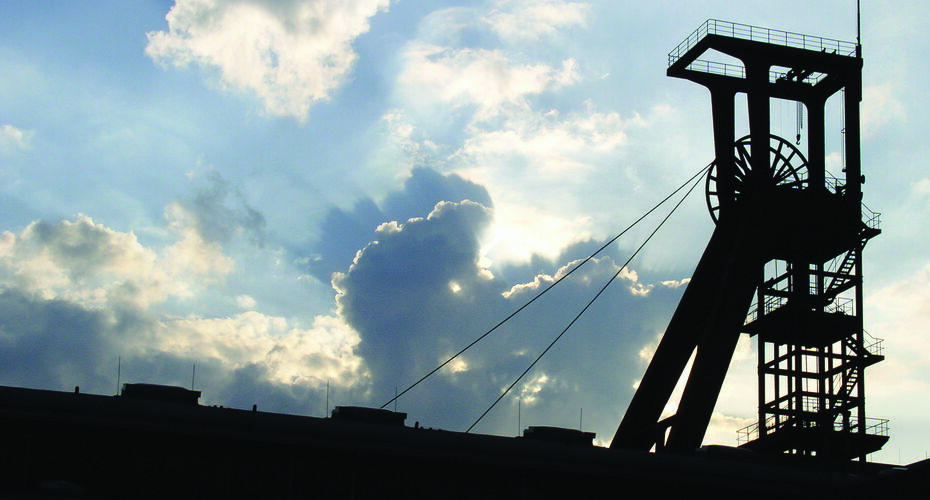
I spent my internship working directly with two women who made up the core of the ESG (Environmental, Social, and Governance) team. I was very excited about this, as whilst preparing for the interview I had discovered that the mining sector is an incredibly male-dominated sector! Every Wednesday, I would head out to the site and spend the entire day working alongside them. It was a great way to get out of the library and see how a professional office actually functions, especially in an industry as complicated as mining. What started as a short six-week placement ended up being much more substantial – because there was so much to get stuck into, the internship was extended and lasted for the entirety of Term 2.
Although my degree is in no way related to mining, the two most important skills I used in the internship were ones that I’ve learnt – and got good at – through my course: the ability to analyse a lot of information quickly, and how to write reports that don’t waste people’s time.
My first real task at Cornish Metals was a social media analysis, specifically looking at their Facebook engagement. The goal was to see if public support for the mine was trending up or down, and to figure out what the local community actually cared about. I used the same analytical skills that I use for my university essays such as identifying patterns, looking at the tone of the language, and summarising the findings into a clear report. I also pulled from my experience as a Student Content Ambassador (i.e. creating videos and blogs like this one for the University, a role which I’ve been doing for nearly two years), as this has given me a strong feel for how people interact with organisations online. At first, this task did feel like I was ‘just checking Facebook,’ but I later learnt that it actually is a key part of what industry calls a ‘Social Licence to Operate’. Basically, if the local community doesn’t support you, the project can’t move forward – this is industry practice. So, by analysing the comments and engagement levels, I was able to show the company exactly where the potential local issues and concerns were. For example, I noticed that the Instagram posts were often heavy on technical jargon, which led to people asking for clarification in the comments. I suggested that moving forward, project updates should be simplified so that the average person could actually follow the progress. The goal was to make sure the advancements at the mine were understandable for everyone in the community, not just for geologists.
The second ‘big’ task that I was involved in during my time with Cornish Metals was conducting an extensive desktop study to evaluate the company’s multifaceted impact on Cornwall. This research involved synthesising data focusing on geographical value, economic impact, and social value to the company, and creating a report based on the results.
This was by far the hardest task I had to do, as I had to talk with the geologists and understand all of their mining data explanations, which at the start were completely foreign to me! Then I had to simplify these down for the report, and frame them in a way which would clearly display the continued and effective role Cornish Metals is playing in Cornwall’s regional revitalisation. In this report, I analysed the economic potential of tin (one of the metals mined at South Crofty) as a critical mineral for the economy’s “green transition,” highlighting how the project could generate 175 direct jobs during pre-production and contribute £102 million in UK corporation taxes. Furthermore, I mapped the company’s social footprint, documenting their support for local sports clubs, £7,845 in educational funding for underfunded schools, and charitable partnerships with organisations like Plant One Cornwall.
This study sharpened my ability to perform secondary research and data triangulation: skills which I’d already started to develop in my uni work, but which massively improved as I worked to cross-reference internal company targets with global market trends and local socioeconomic data. As a bonus, by identifying key “Social Value Indicators,” I gained a deep understanding of the ESG framework. This framework is used by many sectors outside of mining, so understanding it will undoubtedly be valuable in my future career.
Ultimately, this experience taught me how to move beyond simple facts to demonstrate how a project aligns greater goals – i.e. in his case, how the technical work of Cornish Metals aligns with the UN Sustainable Development Goals, specifically regarding infrastructure and reduced inequalities in deprived areas like Camborne and Redruth.
The value of doing an internship with a local business
One thing I didn’t anticipate was how much this internship would teach me about Cornwall itself. As a student, especially one who moved here from abroad, it’s easy to keep myself mostly in a student bubble. I mean, prior to this experience, I mainly moved between campus, the library, and the same handful of spots in Penryn or Falmouth. Sometimes on a sunny day I would go on a coastal walk, but I now realise that I definitely had a comfortable yet quite narrow understanding of the place I was actually living in. Working with Cornish Metals changed that. For the first time, I was genuinely engaging with the social and economic fabric of the region — not as a tourist, not as a student passing through, but as someone sitting in a room where real decisions about Cornwall’s future were being made.
I learned that Cornwall has a complex and layered relationship with its mining heritage: it was once the beating heart of global copper and tin production, and today there is a serious, ongoing effort to revive that industry in a way that is sustainable and community-led. I started to understand why community trust matters so much here, and why development in Cornwall isn’t simply an economic question but instead it carries real historical weight and genuine local anxiety about who benefits and who gets left behind. These are conversations happening in the towns right outside campus that most students, myself included, had simply never tuned into.
Being embedded in a local business rather than a large corporate environment also meant the stakes felt tangible. A lot of the people who worked at Cornish Metals were sons/daughters of miners, and they showed immense pride in being part of a big effort in trying to revive this industry in Cornwall.
For any student considering an internship, particularly those of us who have relocated for university, I would strongly encourage looking locally first. Your university town or city is not just a backdrop to your degree. Cornwall has its own history, industries and its own future being written right now. An internship is one of the best ways to actually become part of it, even briefly.
So what are my main takeaways from this experience?
Looking back a year later, I can honestly say this internship was one of the best decisions I made during my time at the University of Exeter. While any internship is useful for a CV, choosing to step into an industry so far off my radar was incredibly eye-opening. It pushed me out of my comfort zone and forced me to apply my degree in a context I never would have imagined.
Firstly, the experience broadened my perspectives on the industries I could enter post-university. I learned that mining is a fast-growing sector with massive implications for the future, and seeing the operational side of a project like Cornish Metals gave me a much more grounded understanding of sustainability. This interest actually shaped my final-year module choices; I chose a module specifically on the politics of mining, focusing on artisanal small-scale mining in Africa. Even though the context differed from Cornwall, the concepts I learned during my placement, such as the “Social License to Operate,” were central to the academic debates.
Additionally, this internship was a major factor in my decision to pursue a Masters in Sustainable Development. It influenced me to move away from “pure” politics and focus on how sustainability and industry intersect. Mining is deeply linked to the global transition to green energy, and I wouldn’t have realised my passion for that connection without this placement.
Lastly, the internship has proven to be a unique talking point. In interviews for other roles, it is always the biggest conversation starter. People are often surprised to see a Politics and International Relations student with experience at a mine, but it allows me to demonstrate how I can adapt my analytical and communication skills to any environment. It has been a perfect way for me to show proven experience in applying the skills I gained from my degree to a complex, real-world industry.
My last words of wisdom
If I could give one piece of advice to anyone looking at internship listings right now, it’s this: don’t place restrictions on yourself.
I almost didn’t apply for this because I thought a Politics student had no business being at a mine. I was wrong. It turns out that technical industries are exactly where our skills are needed.
Choosing a local business over a generic corporate scheme also makes a massive difference. You’re working on something that actually affects the community you’re living in. If you choose this path then you will be actively contributing to the region’s future.
If an opportunity looks a bit “out there” or doesn’t perfectly match your degree title, take it anyway. Stepping out of the university bubble and into a local industry was the best move I made at university. It’s better to spend six weeks being challenged in a new environment than four years staying in your comfort zone.