
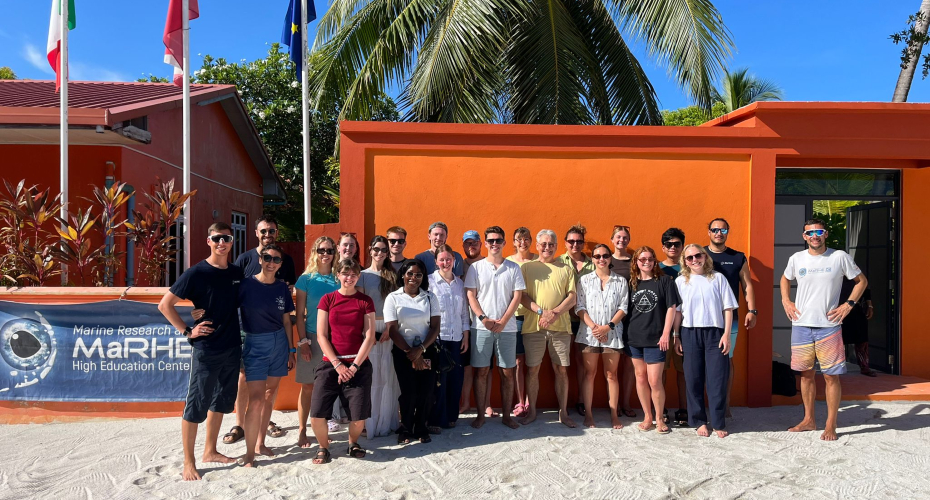
Halo! I’m Ariq, and currently halfway through my MSc in Marine Environmental Management. One of the most awaited parts of my programme is the field course to the tropical paradise of Maldives!
Doing a master’s degree is definitely challenging, but it comes with some incredible rewards. After two terms full of classes and assignments, as well as the daunting research project presentation, we got to study in the field while trading the cold UK winter for the warm tropical seas of the Maldives. It’s by no means a holiday as we do still have field classes and assessments, but hey, we still need to enjoy it to the fullest, right?
The trip is part of the Coral Reef Field Course module, where we learn about the ecology of coral reef ecosystems and the threats they are facing. The Maldives was chosen as the destination for this fieldwork because it offers a unique site for studying coral reefs. The entire country was built on coral! The country has 26 atolls and more than a thousand coral islands stretching across the Indian Ocean and obviously has a high marine biodiversity. It’s really interesting to learn how this island nation was formed. I suggest you look it up, or better yet, apply for this MSc programme to learn more!
Our life on Magoodhoo Island
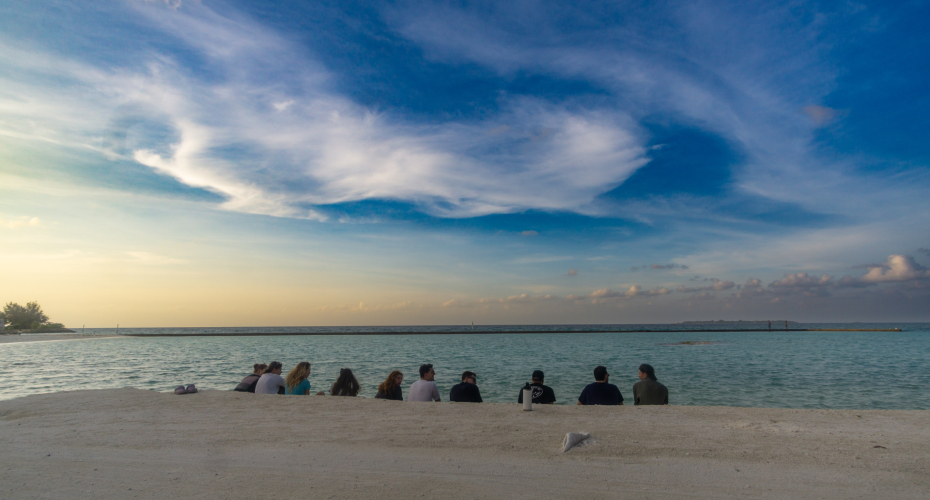
Our base is located on Magoodhoo Island in Faafu Atoll, a three-hour boat ride from the capital of the Maldives. It’s a small local island, so there are hardly any tourists, if any at all. The trip was held in April because it’s the dry season, so the sea was nicely calm and the sky was clear. Just imagine the gentle sound of crashing waves and rustling leaves on a sunny day. It’s the perfect place to experience a peaceful island life. We stayed for nine nights at the MaRHE Center hosted by the University of Milano-Bicocca. The student dorms, dining room, classroom, and communal spaces are located in the centre, so this is where most of our activities took place.
The sea is our classroom
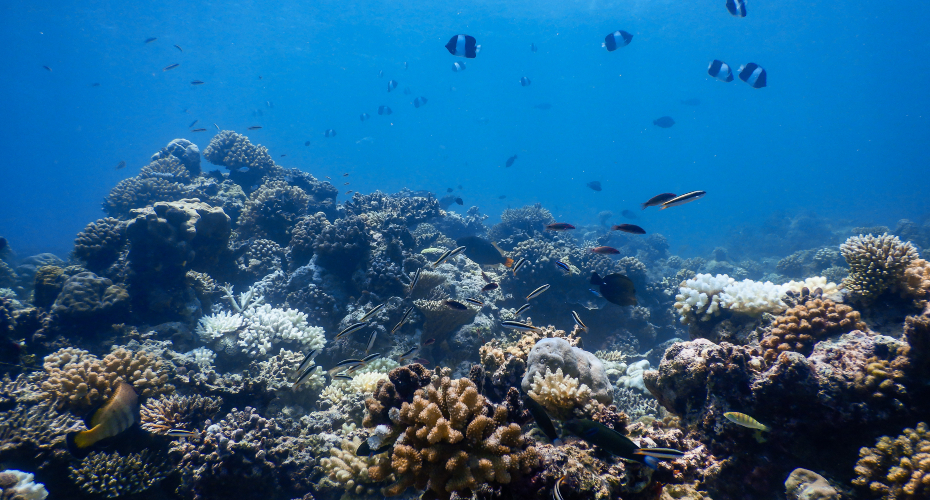
What I like studying about ecology is that learning isn’t restricted to inside a lecture theatre. Step outside and the world becomes a much bigger classroom full of exciting things to explore.
A typical day started with a lecture after breakfast, followed by a boat trip to nearby reefs for practical sessions. Normally, it’d be done by snorkelling, but if you’ve got at least a rescue diver certification (or equivalent), you could do a dive instead, which is what most of us did. Then, we headed back to the island for lunch break. After lunch, either we had another class or it was time for us to process the data that we collected from the morning’s practical session. On some days, we also had an afternoon practical session and a short evening lecture as well. So, it could be a physically and mentally demanding day. However, all the tiredness was swept away by the ocean when we were treated to a breathtaking (literally!) view of vibrant and colourful coral reefs.
It’s always fascinating to learn how the natural world works and how it came to be. Even the small differences in sand textures a few metres apart can be explained by what’s happening under the water around the island. Fun fact: most sand on the beach is actually parrotfish poop! Keep that in mind the next time you’re sunbathing on the beach.
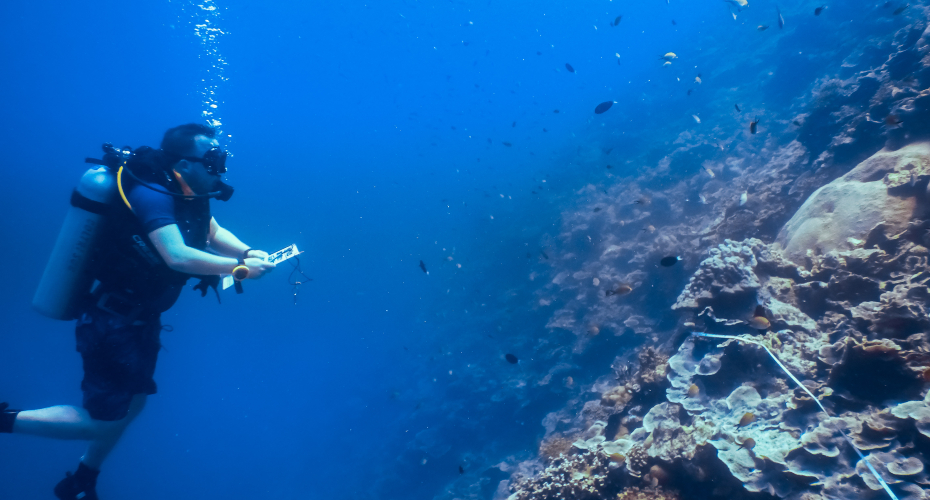
One of the most challenging parts of the course is being able to identify more than 80 reef fish species and coral genera by their common and Latin names. However, once you’re able to do so, the underwater world becomes much more interesting. Before learning about ecology, I only saw coral reefs as a beautiful sight to behold. But the reefs feel livelier now I know the different types of fish that live there and what they are doing. I started to look in more detail at what’s hidden between the crevices. It’s exciting to spot something that we studied in the classroom out in the field, making learning more interactive. That’s why fieldwork is crucial for ecologists because it connects us to what we’re studying.
What I also find meaningful is that the data we collected isn’t just for practice but also gives insights into the conditions of coral reefs at the site. The field course is conducted in the same place yearly, so our lecturer showed a time-series of the data and compared our data to that collected in previous years. We could see from that data the trend in coral reef health which corresponds to the actual situation (such as bleaching events in certain years). Although our data may not be “research-grade” because it’s still just practice, seeing these trends makes the data we collected more relevant because it shows valuable insights about the reef’s conditions.
Skills we can’t learn in a lecture theatre
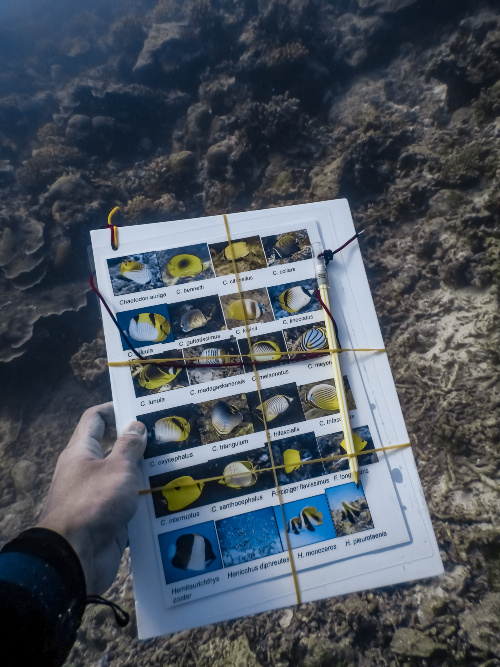
Aside from learning technical skills, like underwater data collection, species identification, and data processing, fieldwork also helps with developing soft skills. When collecting data, we’re in a buddy pair so it’s important to have good teamwork. Being in the field also means situations can be unpredictable. Although the environment conditions were relatively calm most of the time, little hiccups can happen in the field which means you need to be adaptive. For example, one time the reef topography that my buddy and I got was too vertical to place the quadrat, so we had to carefully take turns holding it while recording data on a slate.
Reef organisms can also be very complex to identify, so you need to be aware of the time limit when collecting data as you have limited air supply. Diving itself can pose risks, which is why it’s crucial to make sure that you have all your equipment and that it’s in working condition. This trains you to be thoroughly prepared and detail-oriented, as you have to be quick in the field while having many pieces of equipment to bring with you. Generally, in the field, you need to have good self-management because you need to take care of yourself and make sure you’re physically fit. You also need to be on time and have your priorities straight so you can complete all your tasks efficiently with the tight schedule.
A perfect study-life balance
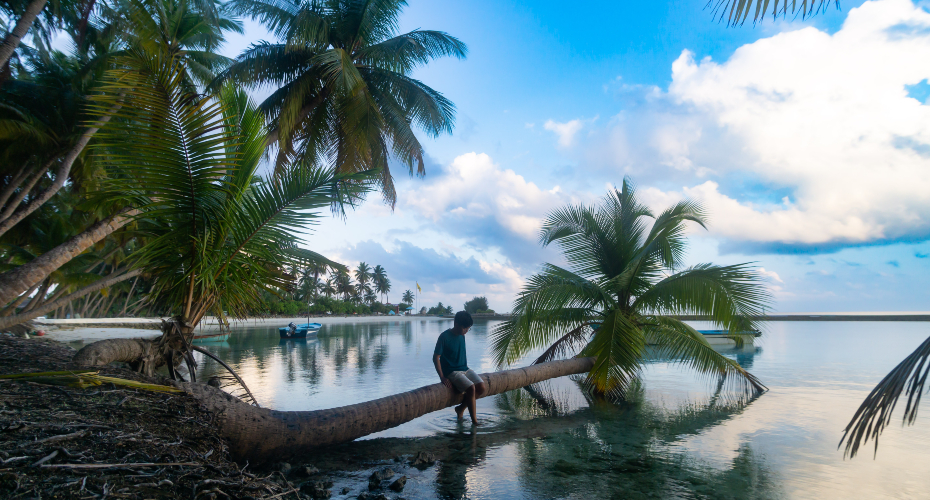
The best thing about having a field course in the Maldives is that the minute you take a break, you’re already on a holiday! We do have plenty of free time in the afternoon and evening to explore the island. Magoodhoo is a small local island, so there are barely any tourist attractions, but the sea is at our doorstep. We usually have a snorkel at the house reef around the island at sunrise (a lovely way to start the day!) – cool things like reef sharks, stingrays, eagle rays, and turtles could be encountered. When I’m too tired to snorkel in the morning, I just sit on a pier watching the sunrise as marine life passes by. I even spotted a group of seven eagle rays! We usually also observed the pier in the evening after dinner where we were almost guaranteed to meet our nurse shark friend swimming peacefully past the pier. I also love stargazing, and a remote island with almost no pollution is the perfect stage to see the sea of stars. I even went out of my way to wake up at 1 am to witness the Milky Way in its full glory. Some of us also brought card games to just chill and play in the communal area.
Even during the practical sessions, if we finish the data collection early, we could use the remaining time to explore the reefs. My favourite dive is at a dive site called Route 66. It’s on a sloping reef with a flat sandy bottom at around 30m deep. It was a pleasurable dive as we don’t have to do any hands-on tasks (but, of course, we still need to practise what we learnt like identifying fish and looking for coral stresses). What I liked about this dive was that the visibility was excellent. We could still see the water surface even at below 20m. Usually, when facing seaward, all we can see is just blue, and the limited visibility restricts our vision. But that time, the great visibility made the dive site feel very spacious. Some reef sharks were also seen near the bottom.
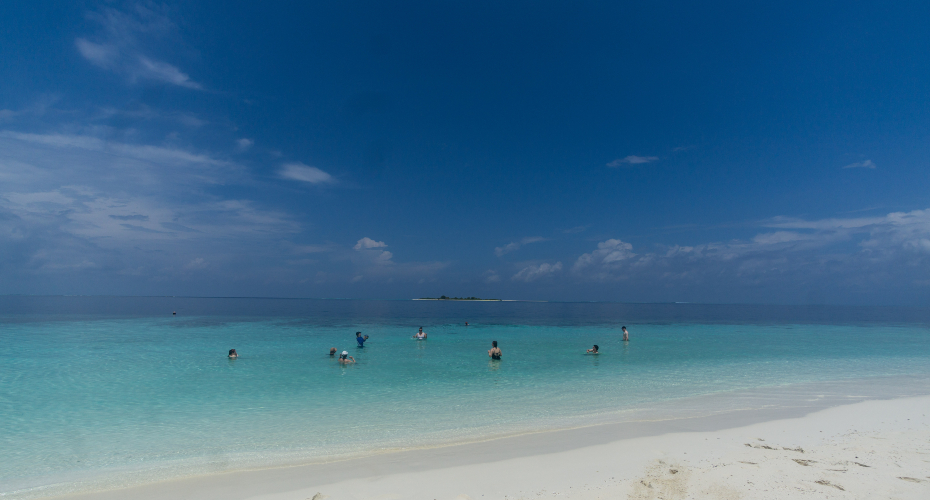
We also had a “day off” to an uninhabited island. We were dropped off the boat into the sea and snorkelled our way to the island. On the island, we just enjoyed the tropical paradise! Some were sunbathing, some were playing with a beach ball, and some were snorkelling. Truly a relaxing day.
My favourite moments
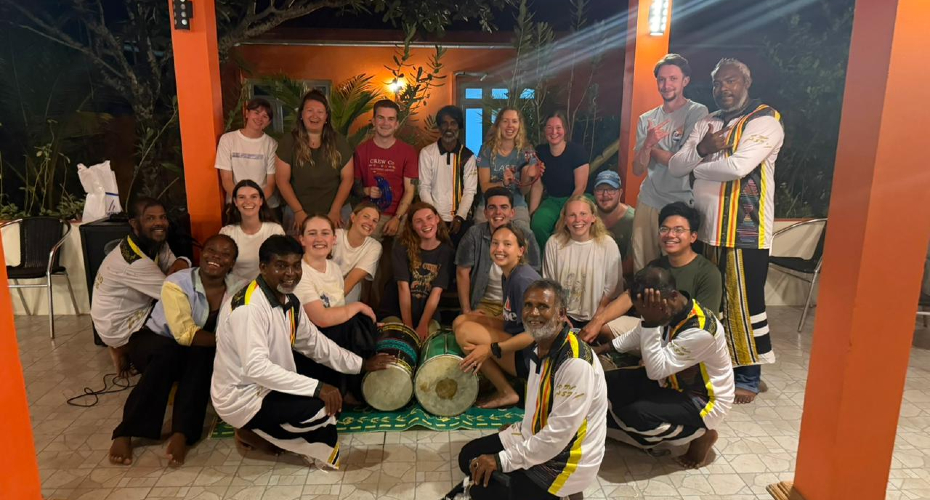
If someone asked me what the most memorable moment was, it’s difficult for me to answer because every moment is worth remembering! But one of the highlights was when a pod of spinner dolphins was bow riding along our boat. We also had some special evenings, like a dinner served with a variety of Maldivian bite-sized snacks called hedhikaa, and a traditional music and dance performance called Boduberu on our final night. The performance featured energetic drumming, singing, and dancing. The dancer invited us to dance with them, and believe me, it was a proper workout! It was a very fun night.
Personally, one of the most memorable moments is the photo competition. We had a casual competition where we could submit our best photos taken during the trip, and we anonymously voted for the best one. My photo came out as second runner-up! I received a book titled Reef Life written by our own lecturer, Callum Roberts, as the prize.
The trip has ended, but the memories stay
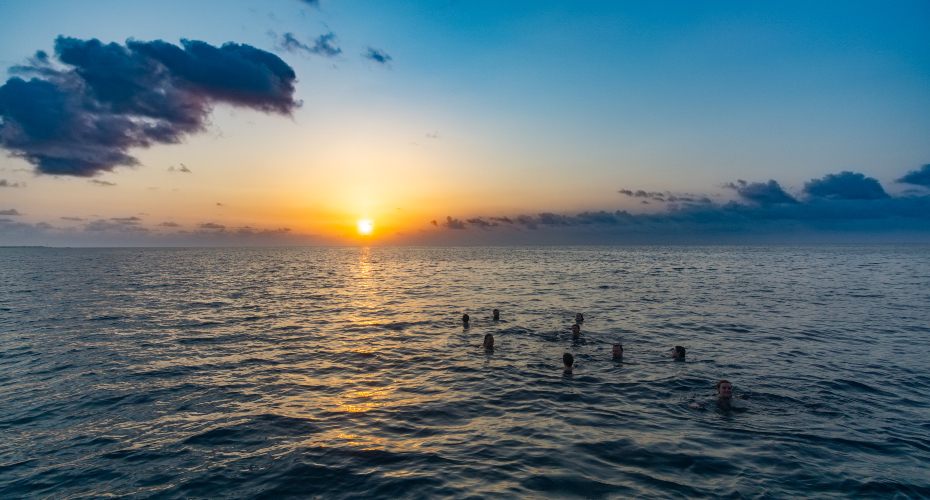
All in all, it was a field trip to remember from my time as a master’s student. The days spent together on that small, remote island gave me the chance to get to know my course mates better. This kind of experience is what brings people together.
For me, as an Indonesian who comes from a tropical country, this field trip made me feel like I was back in my habitat, the warm and beautiful tropical sea. The vibrant coral reef with bustling reef fish—this is what I want to protect. This field trip reminded me of the reason why I chose to pursue a career in marine conservation and chose MSc Marine Environmental Management at the University of Exeter as my master’s degree.
I could go on and on talking about this trip, but I’m going to stop now. To finish things off, I created an Instagram reel if you’d like to see the visual summary of this trip!