
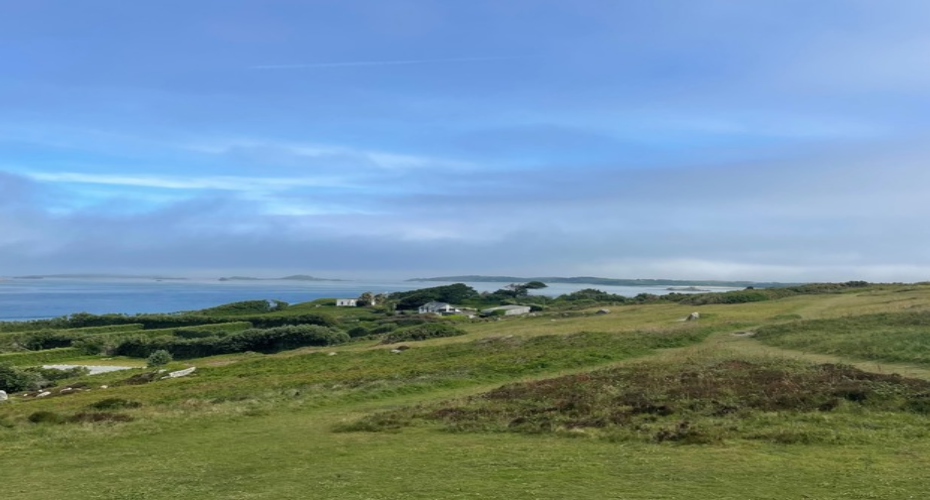
Hello, I’m Emily, a first year Zoology student, and I have recently just got back from the Isles of Scilly as part of my second year BSc Zoology field course.
For me, my field course to the Isles of Scilly will stay with me for a long time. From days out in the field collecting data, early morning moth trapping, and boat trips, this field trip reminded me of why I wanted to study this degree.
As a Zoology student at the University of Exeter, the trip was part of one of my second year modules. The trip involved fieldwork, group presentations, as well as an unforgettable experience. Notably, the Isles of Scilly field trip was fully funded and organised by the University of Exeter, making the trip fully accessible and enjoyable for everyone. Getting to learn in a new landscape, surrounded by unique wildlife made my week in the Isles of Scilly so special and it is an experience I will never forget!
Day one
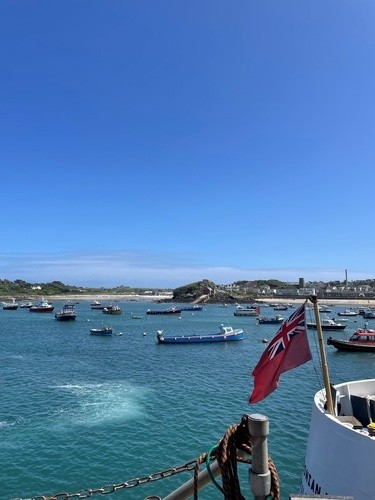
The day started at 6:15 with a coach ride from the Penryn Campus to Penzance. The early start meant we got to enjoy a full day on the Isles of Scilly. We got the Scillonian ferry from Penzance to St Mary’s Island, which is where we would be staying for the whole trip. The ferry journey was just under 3 hours, but it didn’t feel too long as we spent most of the time out on the deck spotting lots of wildlife, from guillemots to seals! The journey is organised fully by the university, making the trip so much easier and stress free.
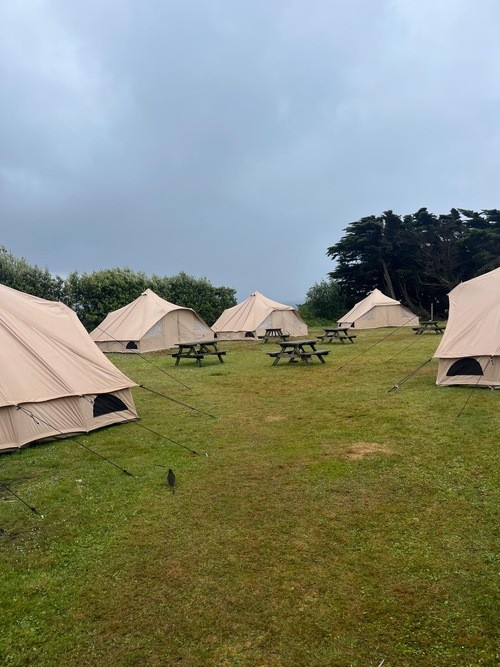
Once we arrived at St Mary’s we had a short walk to the Garrisons campsite. Fortunately, the tents were already pitched for us arriving, so all we had to do was get our bags and relax for a bit before our first exercise. After having a bit on free time to settle into our tents we went on an orientation walk around the town in St Mary’s, getting to see the Scillonian club – where we had dinner each night – and the cafés and the Co-op, which is where people bought lunches from each day. The University also provided an allowance to each student to spend on lunches throughout the week.
We then walked past Porthcressa beach and up to Peninnis Point where we did our first species exercise on golden hair lichen in our research groups, which we then presented our findings back at the campsite. Unfortunately, we all got soaked as there was heavy rain for the whole afternoon, but luckily there are hot showers at the campsite. After a long day of travelling and fieldwork we were all ready for our dinner in the Scillonian club. The dinners each night were delicious and definitely a highlight of each day. We had meals such as a curry, chilli and a roast dinner, with each night also having vegetarian/vegan options.
Day two
After a cold first night in the tent, I was ready to get up and start the day with breakfast in the communal tent. It was supplied with all breakfast essentials and charging points for devices. We had an early start on the second day as we were going to another island, St Agnes, for the day.
After a 10-minute ferry ride to St Agnes, we got a talk from the Isles of Scilly Seabird Recovery Project who have removed rats from St Agnes. We then went on a walk around to Gugh, a small island connected to St Agnes by a sand bar. Here, we got to see Manx Shearwater and a breeding colony of Lesser Black-Backed Gulls. It was so interesting eating to hear about the wildlife on the Isles of Scilly, and how it is a haven for rare and endangered species.
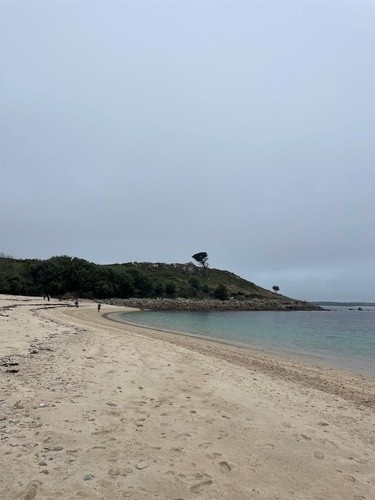
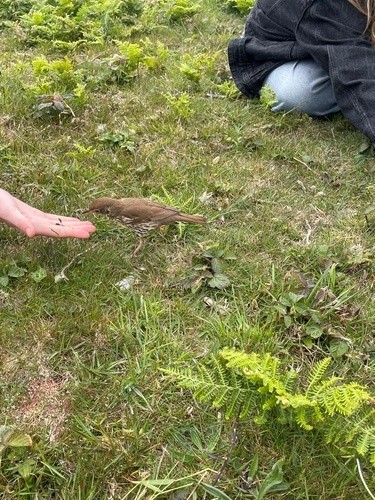
The sun eventually came out just in time for our boat trip around the islands, where we saw seals, puffins, kittiwakes and cormorants. Our next activity was to complete an experiment on bird island tameness in our research groups which we also had to present to the other groups. The birds in the campsite have become so used to people that they come right up to you and sometimes feed out of your hand! After our short presentations, we had dinner and then had the rest of the night to ourselves. My friends and I decided to walk to one of the beaches on the island, where we found some very friendly ducks.
I’ve found that the field trip really helped to strengthen friendships and form new ones as you get to meet new people on your course who you may have not spoken to before. After spending seven days on an island, you all become good friends and form great memories together!!
Day three
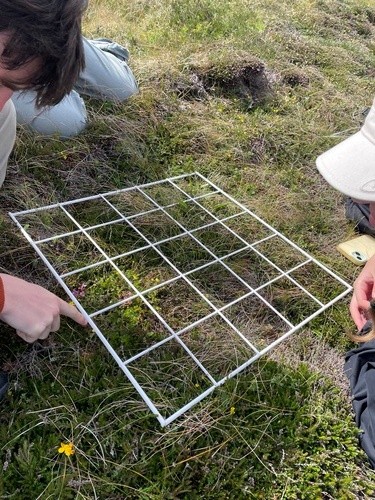
Wednesday was full of biodiversity exercises. The first was back out on Peninnis Point, where my group looked at how plant biodiversity changes in relation to disturbance and pathed areas. We spent all morning out on the headland and headed back to the campsite for lunch and to present our findings. Later on, we had another exercise involving looking at plant-pollinator interactions. The fieldwork experience that I gained on this field trip will help me not only in second year but also in my future career. You get to learn lots of new fieldwork techniques as well as learning about new species. Crucially, getting to learn about nature and the environment whilst being surrounded by wildlife makes the field trip so special as you get to put into practice the methods that you have spent first year leaning about in lecture theatres.
After another full and busy day, a group of us went down to the beach for a swim. It was quite cold and windy, but the water was definitely warmer than Falmouth! The free time we had in the evenings has made the field trip so memorable, from sea swims, to playing cards in the pub and beach trips, so that you get to relax after long days, whilst getting to know your coursemates so much better.
Day four and five
After three days of completing prescribed fieldwork in our research groups, we got to design our own research question to investigate over the next two days, which was approved by the staff. My group chose to look at pollinator interactions with disturbed versus undisturbed flowers. Getting to come up with our own question, predictions and methods was so fun and helped us all to engage more fully with the nature around us. My group spent all of Thursday and Friday morning completing data collection. This involved finding appropriate sites to complete the data collection and long periods of recording data. But it was all worth it as we got to explore more of the beautiful island of St Mary’s!
Following all our hard work over the two days, all the groups had to give a short presentation on their research. At first, I was quite anxious about giving a presentation in front of a big group, but the lecturers made us all feel comfortable and relaxed. Importantly, all the other students are super supportive and excited to hear about each other’s research projects! It can be daunting to step out of your comfort zone, especially when with new people, but once you give it a go, it isn’t as scary as it first seems!
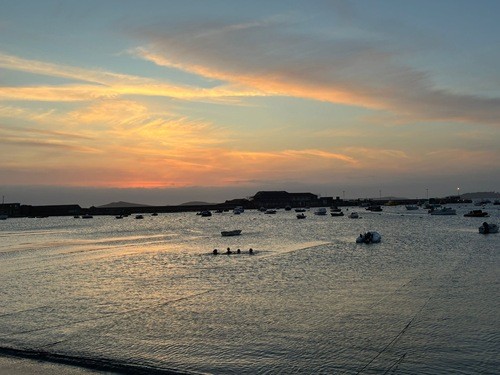
I found that throughout the field trip I was able to grow in confidence and improve my communication and presentation skills. I will be able to take lots from my experiences during this field trip into the second and third year of my degree with me. After dinner on the Friday night we had a quiz, which was organised by one of the staff members, and then we all went for one last beach trip to watch the sunset. Another great part of the field trip is getting to know the staff better. It can feel difficult or slightly intimidating to speak to them in large lecture theatres, so the field trip gave us all a chance to ask more questions in a relaxed environment.
Day six
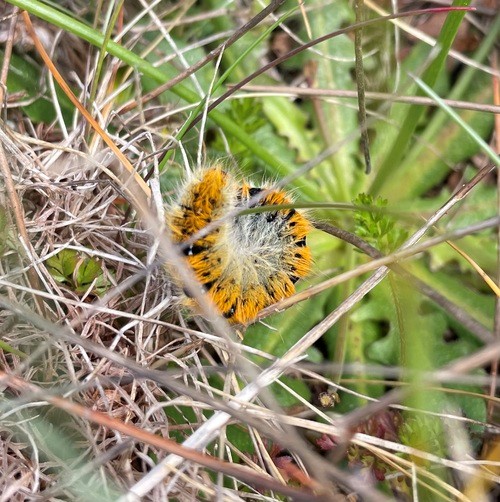
As the trip came to an end, I was sad to be leaving the beautiful Isles of Scilly but looking forward to sleeping in my bed again and not an air mattress! We had an early start as we had to pack up our bags, but after breakfast we had the whole day to ourselves. With the sun out and a gentle breeze, a group of us decided it was a perfect time to explore more of the island. We ended up walking around the whole island along the coastal path, taking us around 4 hours. We passed some beautiful beaches, where we found sea glass and shells, and found an island with some very friendly goats, all whilst spotting wildlife along the way.
After a hot and long walk, we got cold drinks from a local café, then it was time for souvenir shopping! By 6 o’clock we were back on the ferry and heading back to Penzance. The ferry back was very exciting as some of us got to see a minke whale, as well as other exciting wildlife along the way. We made it back to Penzance, where the coach was waiting to take us back to campus.
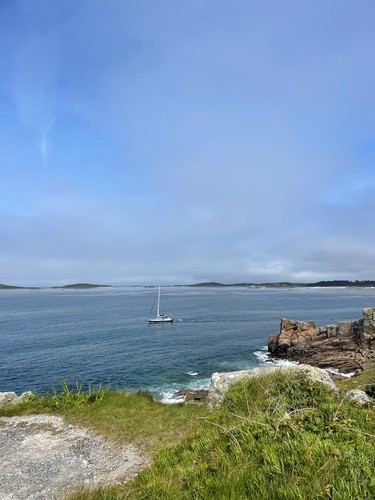
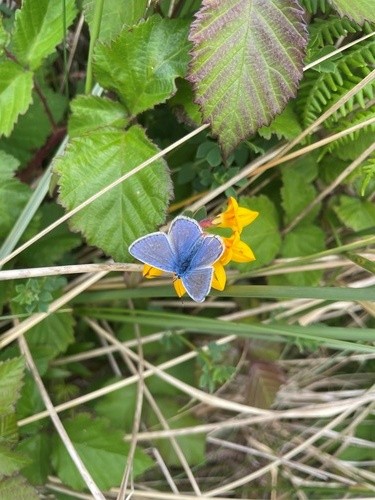
My field trip to the Isles of Scilly reminded me exactly why I wanted to study Zoology. It was more than about seeing wildlife, it was also getting to travel somewhere new and experience the diverse and unique ecosystems and species that we study in lectures. Crucially, getting to learn in a beautiful place, whilst forming friendships and improving skills that will benefit me beyond university has meant this field trip is an experience I will always remember.
Field courses like this make studying at the University of Exeter so special and exciting, and I can’t wait for more field trips in the future through my course.